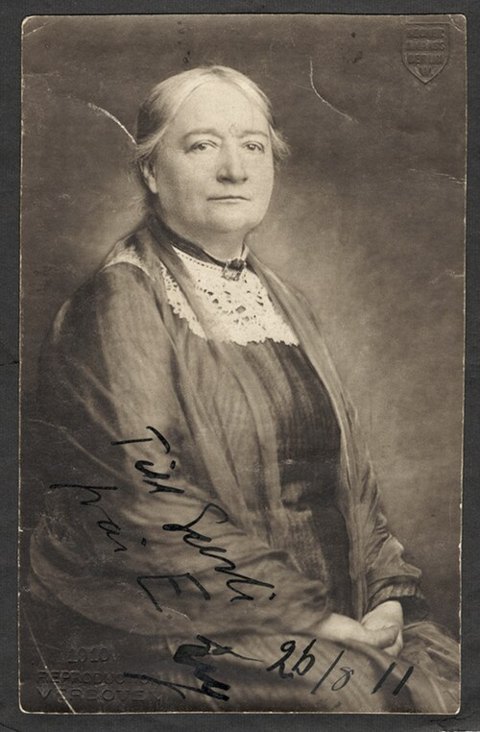
Ellen Karolina Sofia Key (Swedish: [ˈkej]; 11 December 1849 – 25 April 1926) was a Swedish difference feminist writer on many subjects in the fields of family life, ethics and education and was an important figure in the Modern Breakthrough movement. She was an early advocate of a child-centered approach to education and parenting, and was also a suffragist.
She is best known for her book on education Barnets århundrade (1900), which was translated into English in 1909 as The Century of the Child.
Early life
Ellen Key was born at Sundsholm mansion in Småland, Sweden, on 11 December 1849. Her father was Emil Key, the founder of the Swedish Agrarian Party and a frequent contributor to the Swedish newspaper Aftonposten. Her mother was Sophie Posse Key, who was born into an aristocratic family from the southernmost part of Skåne County. Emil bought Sundsholm at the time of his wedding; twenty years later he sold it for financial reasons.
Key was mostly educated at home, where her mother taught her grammar and arithmetic and her foreign-born governess taught her foreign languages. She cited reading Amtmandens Døtre (The Official's Daughters, 1855) by Camilla Collett and Henrik Ibsen's plays Kjærlighedens komedie (Love's Comedy, 1862), Brand (1865), and Peer Gynt (1867) as her childhood influences. When she was twenty years old, her father was elected to the Riksdag and they moved to Stockholm, where she would capitalize on the access to libraries. Key also studied at the progressive Rossander Course.