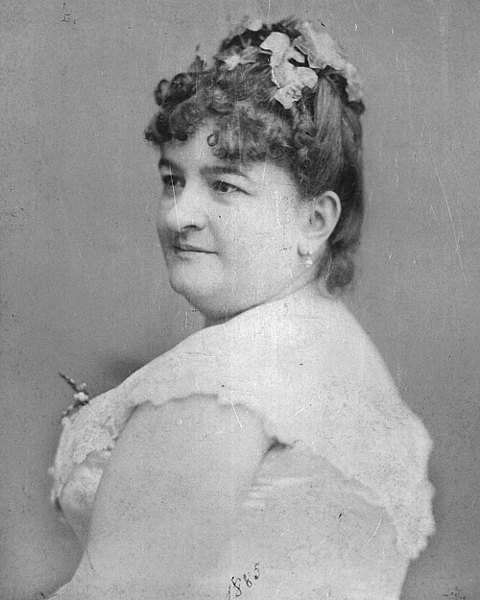
Emilia Pardo Bazán y de la Rúa-Figueroa, Countess of Pardo Bazán (Spanish pronunciation: [eˈmilja ˈpaɾðo βaˈθan]; 16 September 1851 – 12 May 1921) was a Spanish novelist, journalist, literary critic, poet, playwright, translator, editor and professor.
Her naturalism and descriptions of reality, as well as her feminist ideas embedded in her work, made her one of the most influential and best-known female writers of her era. Her ideas about women's rights in education also made her a prominent feminist figure. She also addressed the history of Spain and its influence in contemporaneous politics, coining the term of the Spanish Black Legend.
Childhood and education
Emilia Pardo Bazán was born into an affluent noble family in A Coruña, Galicia, Spain. She was the only child of José Pardo Bazán y Mosquera and Amalia de la Rúa Figueroa y Somoza. The family's principal residence was in Rúa Tabernas but they also owned two other houses, one close to Sanxenxo and the other, known as the Pazo de Meirás, located in the outskirts of the city.
Her father, believing in the intellectual equality of men and women, provided her with the best education possible, inspiring her life-long love for literature. She wrote her first poems at the age of nine.
Emilia had access to a broad range of reading material in her father's library, later stating that among her favorites were Don Quijote de la Mancha, the Bible and the Iliad. Other early readings included La conquista de México by Antonio de Solís and Parallel Lives by Plutarch.