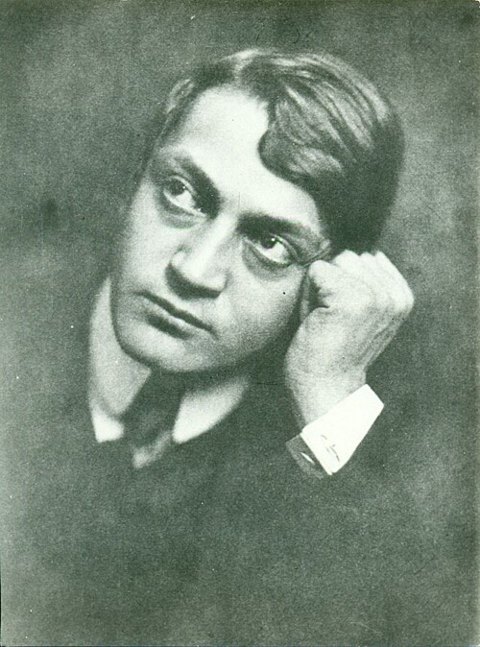
Endre Ady (Hungarian: diósadi Ady András Endre, archaic English: Andrew Ady; 22 November 1877 – 27 January 1919) was a turn-of-the-century Hungarian poet and journalist. Regarded by many as the greatest Hungarian poet of the 20th century, he was noted for his steadfast belief in social progress and development and for his poetry's exploration of fundamental questions of the modern European experience: love, temporality, faith, individuality, and patriotism.
Biography
Ady was born in Érmindszent, Szilágy County (part of Austria-Hungary at the time; now a village in Căuaș commune, Satu Mare County, Romania, called Adyfalva in Hungarian and Ady Endre in Romanian). He belonged to an impoverished Calvinist noble family. Endre was the second of three children. The eldest, a girl named Ilona, died at an early age. The author and poet Mariska Ady (1888–1977) was a niece of Endre Ady.
Between 1892 and 1896, Ady attended the Calvinist College in Zilah (today Zalău, Romania). On 22 March 1896, he published his first poem in the Zilah newspaper Szilágy.
He later studied law at the Reformed College in Debrecen. After dropping out, he became a journalist. He published his first poems in a volume called Versek (Poems) in 1899. He soon grew tired of Debrecen (the town later became a symbol of backwardness in his poetry) and moved to Nagyvárad (today Oradea, Romania), a city with a rich cultural life. In articles written in 1902 for the local newspaper Nagyváradi Napló, Ady paid close attention to the social features of his time. "Wesselényi and a poor peasant! Perhaps unwittingly, master Fadrusz has carved a satire", he wrote, referring to the unveiling of the Wesselényi Monument.