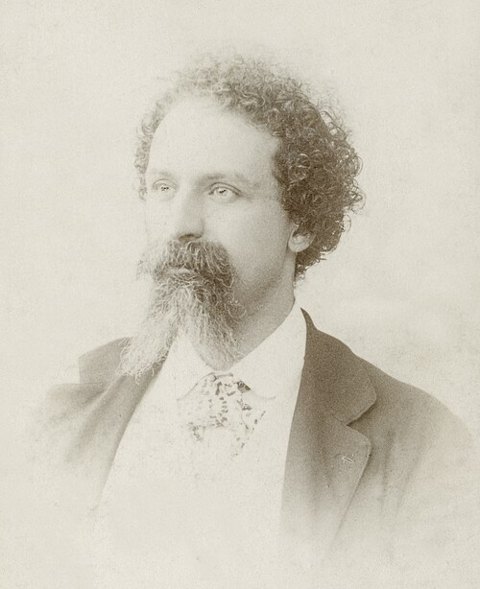
Enrico Ferri (Italian pronunciation: [enˈriːko ˈfɛrri]; 25 February 1856 – 12 April 1929) was an Italian criminologist, socialist, and student of Cesare Lombroso, the founder of the Italian school of criminology. While Lombroso researched the purported physiological factors that motivated criminals, Ferri investigated social and economic aspects. He served as editor of the socialist daily Avanti! and in 1884 saw his book Criminal Sociology published. Later, his work served as the basis for Penal Code of Argentina (1921). Although at first he rejected the Italian fascist dictator Benito Mussolini, Ferri later became one of Mussolini and his National Fascist Party's main external supporters.
Early life
Ferri was born on 25 February 1856 in San Benedetto Po, in the modern-day Italian region of Lombardy, then part of the Austrian Empire as the Kingdom of Lombardy–Venetia. He worked as a lecturer first and later as a professor of criminal law, having spent time as a student of Lombroso. While Lombroso researched anthropological criminology, Ferri focused more on social and economic influences on the criminal and crime rates. Ferri's research led him to postulate theories calling for crime prevention methods to be the mainstay of law enforcement, as opposed to the punishment of criminals after their crimes had taken place. He became a founder of the positivist school, and he researched psychological and social positivism as opposed to the biological positivism of Lombroso.
Political career
Ferri, at the time a member of the Italian Radical Party (PRI), was elected to the Parliament of the Kingdom of Italy in 1886. In 1893, he joined the Italian Socialist Party (PSI), and edited their daily newspaper Avanti! In 1900 and 1904, he spoke out in the party congress against the roles of socialist ministers in bourgeois governments. Ferri favoured Italian neutrality during World War I, and he was re-elected as a PSI deputy (member of the Chamber of Deputies) in 1921. Ferri is mentioned several times by Scipio Sighele as a contemporary colleague and friend in Sighele’s early book The Criminal Crowd about mass psychology. Both sociologists shared more or less the same view about the influence of a crowd on the members of that crowd. This fundamental idea was also described by Gabriel Tarde and Gustave Le Bon. In post-war Italy, he became a supporter of Mussolini's fascist regime. Ferri died in 1929.