Author
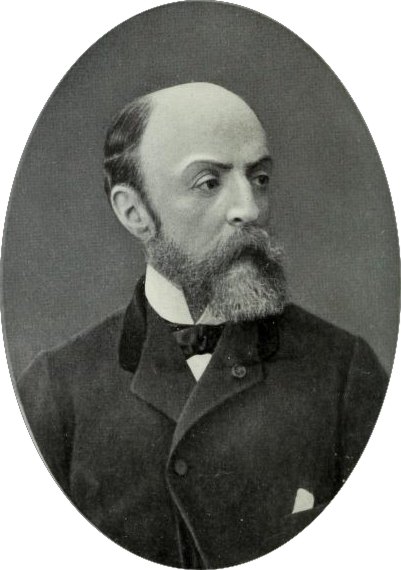
Eugène Fromentin
French painter (1820-1876)
- Born
- October 24, 1820, La Rochelle
- Died
- August 27, 1876, La Rochelle
- Nationality
- France
- Occupation
- Painter, writer and art historian
- Movement
- Orientalism
- Notable works
- Falconry in Algeria: the kill · Courriers, country of Ouled-Nayls, in spring · Arab Riders Stop in the Forest · Farmyard with Cattle
Life and work
Eugène Fromentin (French pronunciation: [øʒɛn fʁɔmɑ̃tɛ̃]; 24 October 1820 – 27 August 1876) was a French painter and writer.
Life and career
He was born in La Rochelle. After leaving school he studied for some years under Louis Cabat, the landscape painter. Fromentin was one of the earliest pictorial interpreters of Algeria, having been able, while quite young, to visit the land and people that suggested the subjects of most of his works, and to store his memory as well as his portfolio with the picturesque and characteristic details of North African life. His first great success was produced at the Paris Salon of 1847, by the Gorges de la Chiffa. In 1849, he was awarded a medal of the second class.
In 1852, he paid a second visit to Algeria, accompanying an archaeological mission, and then completed that minute study of the scenery of the country and of the habits of its people which enabled him to give to his after-work the realistic accuracy that comes from intimate knowledge.
His books include Les Maîtres d'autrefois ("The Masters of Past Time", 1876), an influential appreciation of Early Netherlandish painting and the Northern Baroque of the Old Masters of Belgium and Holland, Dominique and A Summer in the Sahara. In Les Maîtres d'autrefois he deals with the complexity of paintings by Rubens, Rembrandt and others, their style and the artists' emotions at the time of creating their masterpieces. He is also one of the first "art critics" to approach the subject of The Old Masters from a personal point of view – being a painter himself. He also puts the work in a social, political and economic context, as the Dutch Golden Age painting develops shortly after Holland won its independence. Bernhard Berenson wrote of the book, "I carry Fromentin with me, and read him each evening about the pictures I have seen that he criticizes. He is the only writer on pictures worth his salt, but I do not always agree with him."
Text: “Eugène Fromentin”, from Wikipedia, the free encyclopedia, under the license CC BY-SA 4.0. Dates and facts: Wikidata.
Collection
Books by Eugène Fromentin
1 book