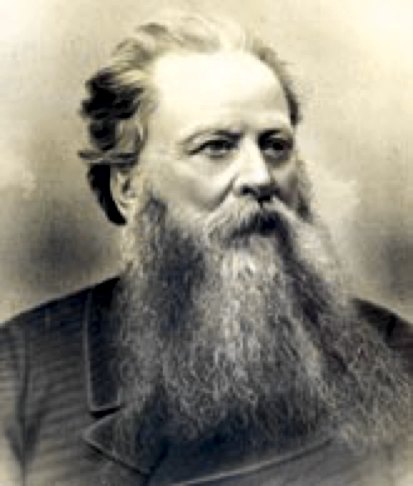
Eugène Le Roy (French pronunciation: [øʒɛn lə ʁwa]; 29 November 1836, Hautefort – 6 May 1907, Montignac, Dordogne) was a French author.
Early life
Eugène Le Roy was born in 1836 in Hautefort, a commune in the Dordogne department in Nouvelle-Aquitaine in southwestern France. His parents were servants to Ange Hyacinthe Maxence de Damas de Cormaillon, Baron de Damas, a former minister who owned the Château de Hautefort. The circumstances there forced them to leave Le Roy with a nurse at a peasant's house in the neighborhood. His childhood memories strongly influenced his future work, which featured many storylines with abandoned children. This was an undeniable social reality of the time that later became one of the clichés of the era's popular romances.
From 1841 to 1847, Le Roy studied at a rural school in Hautefort at a time when most children remained illiterate. He moved to Périgueux in 1848 for further studies at École des Frères. One prominent memory of his childhood was the planting of a tree of freedom (Arbre de la liberté) to celebrate advent in the Second Republic.
Career
In 1851, he refused to join a seminary and became a grocer in Paris. He joined the socialists, as described in his novel Le Moulin du Frau, and assisted with the establishment of the Second Empire. In 1855, he enlisted in the 4th regiment of the French cavalry and participated in military campaigns in Algeria and Italy. He served for 5 years, but then resigned after being demoted in rank for insubordination.
In 1860, after passing the entry exam for the civil service, he became an assistant tax collector in Périgueux. During the Franco-German War of 1870, he joined the francs-tireurs, an irregular military force deployed by France during the early stages of war. Following the final French defeat in 1871, he rejoined the tax collection service in Montignac. He subsequently fell very ill and spent the best part of a year recovering from his illness.