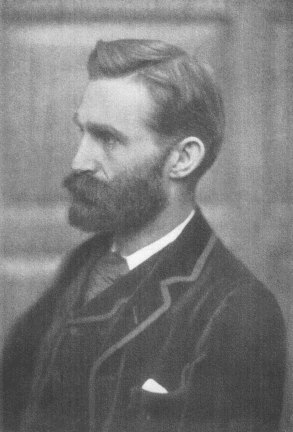
Frank Podmore (5 February 1856 – 14 August 1910) was an English author and founding member of the Fabian Society as well as an influential member of the Society for Psychical Research. He is known for his interest in spiritualism, which he eventually developed a sceptical attitude towards, specifically the claims of mediumship which he attacked in his history of mediumship, The New Spiritualism (1910). However, he defended other experiences such as telepathy and ghosts, which he regarded as telepathic hallucinations.
Life
Born at Elstree, Borehamwood, Hertfordshire, Podmore was the son of Thompson Podmore, an Anglican priest and the headmaster of Eastbourne College. He was educated at Haileybury and Pembroke College, Oxford (where he first became interested in Spiritualism and joined the Society for Psychical Research – this interest remained with him throughout his life). After graduating he went to work for the Post Office, where he worked for most of the rest of his life.
In October 1883, Podmore and Edward R. Pease joined a socialist debating group established by Edith Nesbit and Hubert Bland. Podmore suggested that the group should be named after the Roman General, Quintus Fabius Maximus Verrucosus, who advocated weakening the opposition by harassing operations rather than becoming involved in pitched battles. In January 1884 the group became known as the Fabian Society, and Podmore's home at 14 Dean's Yard, Westminster, became the organisation's first official headquarters.
He was a member of the Oxford Phasmatological Society which dissolved in 1885. In 1886 Podmore and Sidney Webb conducted a study into unemployment, eventually published as a Fabian Society pamphlet, The Government Organisation of Unemployed Labour. Podmore married Eleanore Bramwell in 1891, however, the marriage was a failure and they separated. They had no children.