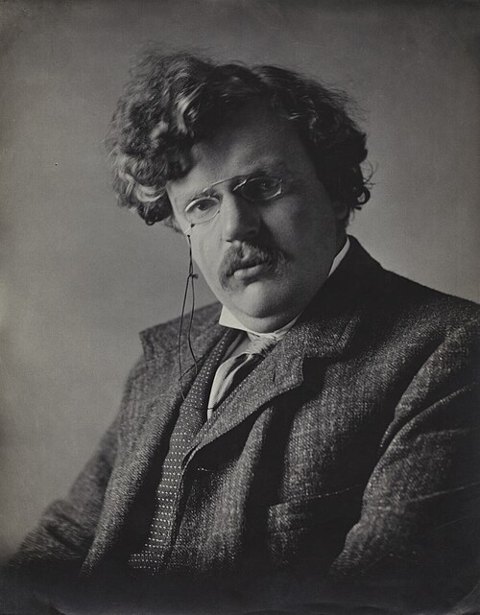
Gilbert Keith Chesterton (29 May 1874 – 14 June 1936) was an English Christian apologist writer. Chesterton's wit, paradoxical style, and defence of tradition made him a dominant figure in early 20th-century literature.
Chesterton created the fictional priest-detective Father Brown and wrote on apologetics, such as his works Orthodoxy and The Everlasting Man. Chesterton routinely referred to himself as an orthodox Christian and came to identify this position more and more with Catholicism, eventually converting from Anglicanism. Biographers have identified him as a successor to such Victorian authors as Matthew Arnold, Thomas Carlyle, John Henry Newman and John Ruskin.
Chesterton has been referred to as the "prince of paradox". Of his writing style, Time magazine observed: "Whenever possible, Chesterton made his points with popular sayings, proverbs, allegories—first carefully turning them inside out." His writings were an influence on Jorge Luis Borges, who compared Chesterton's work with that of Edgar Allan Poe.