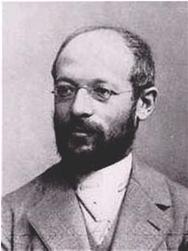
Georg Simmel (German: [ˈzɪml̩]; 1 March 1858 – 26 October 1918) was a German sociologist, philosopher, and critic. A founding figure of sociology, his neo-Kantian approach helped establish sociological antipositivism, asking "What is society?" in analogy to Kant's "What is nature?". He pioneered analyses of individuality and social fragmentation.
Simmel discussed social and cultural phenomena in terms of "forms" and "contents" with a transient relationship, wherein form becomes content, and vice versa dependent on context. In this sense, Simmel was a forerunner to structuralist styles of reasoning in the social sciences and heralded relational sociology.
In "The Metropolis and Mental Life", Simmel anticipates urban sociology, symbolic interactionism, and social network analysis. An acquaintance of Max Weber, Simmel wrote on the topic of personal character in a manner reminiscent of the sociological ideal type. He broadly rejected academic standards, however, philosophically covering topics such as emotion and romantic love. Both Simmel and Weber's nonpositivist theory informed the eclectic critical theory of the Frankfurt School.