The calculus of logic
Online reading View book
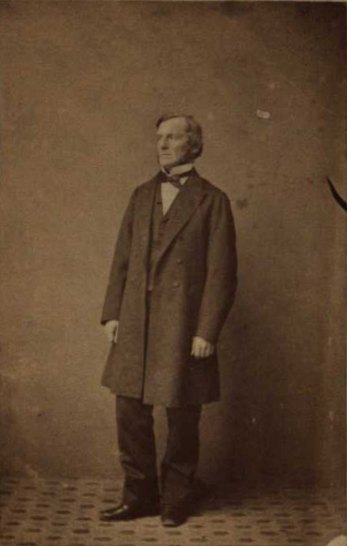
Author
English mathematician, philosopher and logician (1815–1864)
George Boole (BOOL; 2 November 1815 – 8 December 1864) was an English mathematician and philosopher often credited with revolutionizing logic by transforming it from a philosophical study of language into a mathematical system of algebraic equations using binary values and logical operators.
Boole was the son of a shoemaker. He received a primary school education and learned Latin and modern languages through various means. At 16, he began teaching to support his family. He established his own school at 19 and later ran a boarding school in Lincoln. Boole was an active member of local societies and collaborated with fellow mathematicians. In 1849, he was appointed the first professor of mathematics at Queen’s College, Cork (now University College Cork) in Ireland, where he worked predominantly in the fields of differential equations and algebraic logic. He continued his involvement in social causes and maintained connections with Lincoln. In 1864, Boole died due to fever-induced pleural effusion after developing pneumonia.
Boole published around 50 articles and several separate publications in his lifetime. Some of his key works include a paper on early invariant theory and "The Mathematical Analysis of Logic", which introduced symbolic logic. Boole also wrote two systematic treatises: "Treatise on Differential Equations" and "Treatise on the Calculus of Finite Differences". He contributed to the theory of linear differential equations and the study of the sum of residues of a rational function. In 1847, Boole developed Boolean algebra, a fundamental concept in binary logic, which laid the groundwork for the algebra of logic tradition and forms the foundation of digital circuit design and modern computer science. Boole also attempted to discover a general method in probabilities, focusing on determining the consequent probability of events logically connected to given probabilities. He is best known as the author of The Laws of Thought (1854), which contains Boolean algebra. Boolean logic, essential to computer programming, is credited with helping to lay the foundations for the Information Age.
Boole's work was expanded upon by various scholars, such as Charles Sanders Peirce and William Stanley Jevons. Boole's ideas later gained practical applications when Claude Shannon and Victor Shestakov employed Boolean algebra to optimize the design of electromechanical relay systems, leading to the development of modern electronic digital computers. His contributions to mathematics earned him various honours, including the Royal Society's first gold prize for mathematics, the Keith Medal, and honorary degrees from the Universities of Dublin and Oxford. University College Cork celebrated the 200th anniversary of Boole's birth in 2015, highlighting his significant impact on the digital age.
Text: “George Boole”, from Wikipedia, the free encyclopedia, under the license CC BY-SA 4.0. Dates and facts: Wikidata.
Collection
1 book