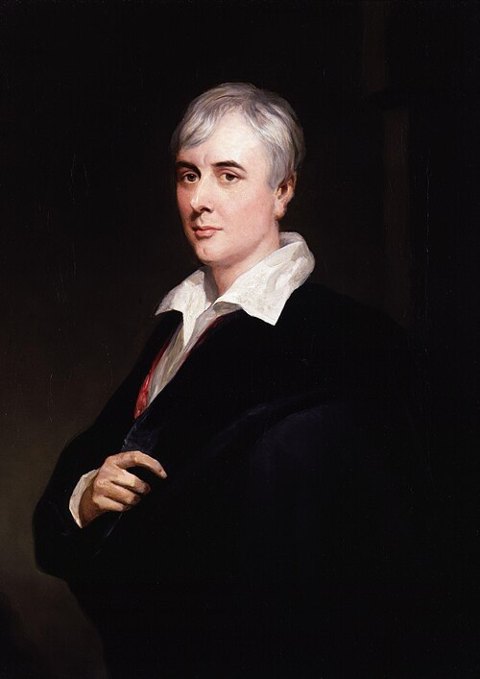
George Henry Borrow (5 July 1803 – 26 July 1881) was an English writer of novels and of travel based on personal experiences in Europe. His travels gave him a close affinity with the Romani people of Europe, who figure strongly in his work. His best-known books are The Bible in Spain and the novels Lavengro and The Romany Rye, set in his time with the English Romanichal (Gypsies).
Early life
Borrow was born at East Dereham, Norfolk, the son of Thomas Borrow (1758–1824), an army recruiting officer, and Ann Perfrement (1772–1858), a farmer's daughter. His father, a lieutenant with the West Norfolk Militia, was quartered at the prisoner-of-war camp at Norman Cross from July 1811 to April 1813, and George spent his ninth and tenth years in the barracks there. He was educated at the Royal High School of Edinburgh and Norwich Grammar School.
Borrow studied law, but languages and literature became his main interests. In 1825, he began his first major European journey, walking in France and Germany. Over the next few years he visited Russia, Portugal, Spain and Morocco, acquainting himself with the people and languages of countries he visited. After his marriage on 23 April 1840, he settled in Lowestoft, Suffolk, but continued to travel inside and outside the United Kingdom.
Borrow in Ireland
Having a military father, Borrow grew up at various army posts. In the autumn of 1815, he accompanied the regiment to Clonmel in Ireland, where he attended Clonmel Endowed School, a Protestant grammar school, and learned to read Latin and Greek from its sole master, Richard Carey, whom he later called "a nice old clergyman". He was also introduced to the Irish language by a fellow student named Murtagh, who tutored him in return for a pack of playing cards. In keeping with the political friction of the time, he learned to sing "the glorious tune 'Croppies Lie Down'" at the military barracks. He was introduced to horsemanship and learned to ride without a saddle. The regiment moved to Templemore early in 1816, and Borrow began ranging around the country on foot and later on horseback.