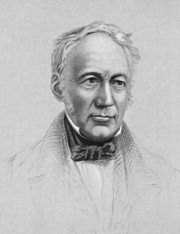
George Frederick Ansell (4 March 1826 – 21 December 1880) was an English scientific inventor, chemist and assayer, and author of a standard work on the Royal Mint.
Biography
Ansell was born at Carshalton on 4 March 1826. He was the 5th child and second son to Robert and Sarah Ansell. Robert was a wealthy mill owner from Carshalton and his family all were wealthy to some extent, with the Ansell family well known in the district. George was apprenticed for four years to a surgeon, and studied medicine with the intention of adopting a medical life as his profession, but abandoned it for chemistry. After undergoing a course of instruction at the Royal College of Chemistry, he became an assistant to August Wilhelm Hofmann at the Royal School of Mines. In 1854, he gave lectures in chemistry at the Panopticon in Leicester Square, London, but that institution did not last long, and Ansell accepted from Thomas Graham, in November 1856, a situation in the Royal Mint.
In 1859, the Royal Mint rejected a batch of gold that was found to be too brittle for the minting of gold sovereigns. Analysis revealed the presence of small amounts of antimony, arsenic and lead. With Ansell's background in chemistry, he persuaded the Royal Mint to allow him to experiment with the alloy and was ultimately able to produce 167,539 gold sovereigns. The only identifying feature to single out an 'Ansell' sovereign is the presence of an additional line on the ribbon, used to tie back Victoria's hair. Today, only 15 - 25 examples of this coin are known to exist and are therefore extremely rare & collectable.