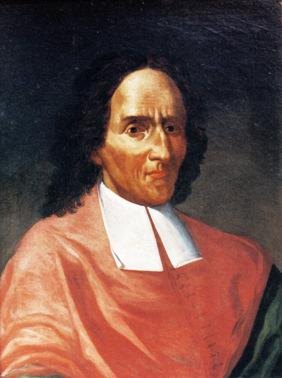
Giambattista Vico (born Giovanni Battista Vico; Italian: [ˈviːko]; 23 June 1668 – 23 January 1744) was an Italian philosopher, rhetorician, historian, and jurist during the Italian Enlightenment. He criticized the expansion and development of modern rationalism, finding Cartesian analysis and other types of reductionism impractical to human life, and he was an apologist for classical antiquity and the Renaissance humanities, in addition to being the first expositor of the fundamentals of social science and of semiotics. He is recognised as one of the first Counter-Enlightenment figures in history.
The Latin aphorism "Verum esse ipsum factum" ("truth is itself something made") coined by Vico is an early instance of constructivist epistemology. He inaugurated the modern field of the philosophy of history, and, although the term philosophy of history is not in his writings, Vico spoke of a "history of philosophy narrated philosophically." Although he was not an historicist, contemporary interest in Vico usually has been motivated by historicists, such as Isaiah Berlin, a philosopher and historian of ideas, and Hayden White, a metahistorian.
Vico's intellectual magnum opus is the book Scienza Nuova or New Science (1725), which attempts a systematic organization of the humanities as a single science that records and explains the historical cycles by which societies rise and fall.