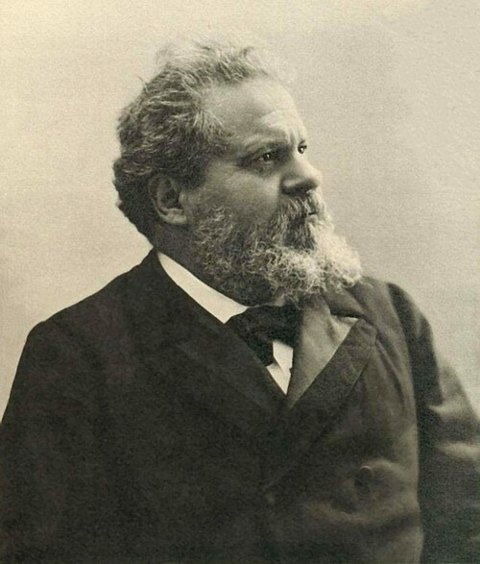
Giosuè Alessandro Giuseppe Carducci (27 July 1835 – 16 February 1907) was an Italian poet, writer, literary critic and teacher. He was noticeably influential, and was regarded as the official national poet of modern Italy. In 1906, he became the first Italian to receive the Nobel Prize in Literature. The Swedish Academy awarded him the prize "not only in consideration of his deep learning and critical research, but above all as a tribute to the creative energy, freshness of style, and lyrical force which characterize his poetic masterpieces."
Early life and education
Giosuè Carducci was born in Valdicastello in Pietrasanta, a small town currently part of the Province of Lucca in the northwest corner of Tuscany, which at the time was an independent grand duchy. His father, Michele, was a country doctor and an advocate of the unification of Italy. A member of the Carboneria, in his youth he had suffered imprisonment for his share in the revolution of 1831. Because of his politics, the family was forced to move several times during Carducci's childhood, eventually settling for a few years in Florence.
Carducci's father attempted to impart to his son his own fervent enthusiasm for the writings of Manzoni, but Carducci never acquired a taste for Romanticism. The boy was also taught Latin by his father and delighted in the works of Virgil and other ancient authors. He avidly read books on the history of Rome and anything dealing with the French Revolution. He wrote his first poems when he was still a boy, in 1846.