Under the Shadow of Etna
Online reading View book
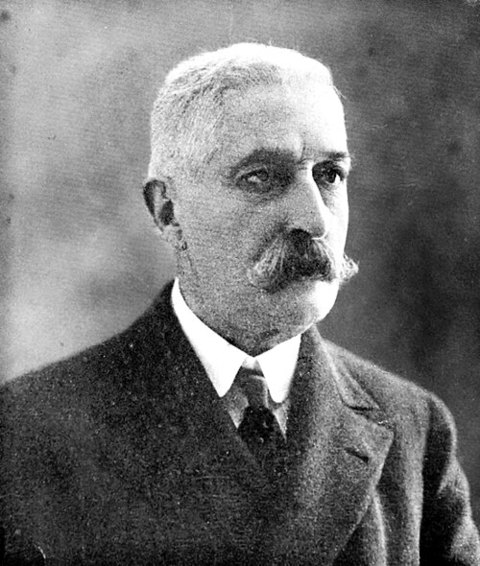
Author
Italian writer (1840-1922)
Giovanni Carmelo Verga di Fontanabianca (Italian: [dʒoˈvanni karˈmɛːlo ˈverɡa]; 2 September 1840 – 27 January 1922) was an Italian realist (verista) writer. His novels I Malavoglia (1881) and Mastro-don Gesualdo (1889) are widely recognized as masterpieces. Verga has been called the greatest Italian novelist after Manzoni. D. H. Lawrence translated several of his works into English.
The first son of Giovanni Battista Catalano Verga and Caterina Di Mauro, Verga was born into a prosperous family of Vizzini in Sicily. He began writing in his teens, producing the historical novel Amore e Patria (Love and Homeland) when he was only 16 years old. Although nominally studying law at the University of Catania, he used money his father had given him to publish his I carbonari della montagna (The Carbonari of the Mountain) in 1861 and 1862. This was followed by Sulle lagune (On the Lagoons) in 1863.
A first turning point in Verga's career came with a visit to Florence in 1865, during which he wrote Una peccatrice (Eng. trans. A mortal sin, 1995). Unlike his previous works, this was not a patriotic, historical novel, but a novel about romantic love. The hero, an artist, falls in love with a femme fatale; he becomes a success and wins her, but once the woman is his, he tires of her and eventually she kills herself. Plainly Verga's attention had shifted from society and political passions to the passions of the individual.
Meanwhile, Verga had been serving in the Catania National Guard (1860–64), after which he travelled to Florence several times, settling there in 1869. Important personalities stayed in this city, and the cultural debate on subjects such as physiology, positivism, and Darwinism was lively. Francesco Dall'Ongaro, who belonged to the older Romantic generation, took him under his wing, and suggested he write about the plight of a girl obliged to become a nun. The result was the highly successful epistolary novel Storia di una capinera (Eng. trans. Sparrow, 2008), published in 1871. Verga moves away from schoolbook rhetoric and assumes the ingenuous tone of a young girl, Maria, writing to a friend. Furthermore, as later with verismo, the determining motivations are economic. Maria's father, a widower, marries again and leaves his daughter without a dowry or inheritance, both being set aside for the new stepsister, whilst the only option for Maria is to become a nun. Maria falls in love with a young man, but he pursues his own financial interests and abandons her for the stepsister. Maria has now no escape from the nunnery; she goes mad and dies.
Text: “Giovanni Verga”, from Wikipedia, the free encyclopedia, under the license CC BY-SA 4.0. Dates and facts: Wikidata.
Collection
1 book