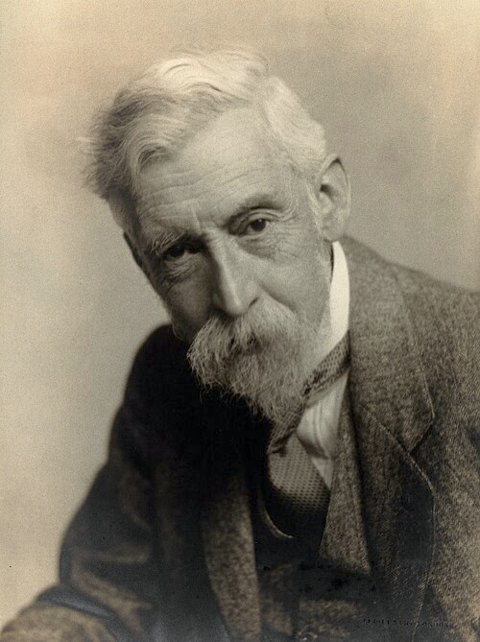
Harold John Edward Peake, (27 September 1867 – 22 September 1946) was a British archaeologist, anthropologist, museum curator, and independent scholar.
Career
Peake was honorary curator of the Newbury Museum (now the West Berkshire Museum), which became well known for its pottery and chronological displays. He served as the president of the Royal Anthropological Institute of Great Britain and Ireland for a two-year period from 1926 to 1928. He was also a member of the council of the Society of Antiquaries of London from 1928 to 1930. He was known for his wide interests, from "[pioneering] research into the beginnings of cereal cultivation" in the Levant through to the local archaeology of Berkshire, and his unifying application of anthropological thought and archaeological evidence.
From 1927 through 1936, he was the co-author of the ten volumes of The Corridors of Time with H. J. Fleure, which aimed to cover world prehistory from "the dawn of human life to the periods when written ideas and abstract thought spread far and wide". A tenth volume was published posthumously in 1956 by Fleure who used research and notes they had done together.
He was awarded the Huxley Memorial Medal and Lecture in 1940; the lecture was titled "The study of prehistoric times".
Views
Peake proposed a "prospector theory" within the school of cultural diffusion: this theorised that the megalithic architecture of Europe such as the dolmens was spread by prospectors from the Eastern Mediterranean, probably originating from the Aegean Islands before 2200 BC, who were seeking commodities such as metal ores. He later argued that the rudiments of megalithic architecture originated in Syria c. 4000BC and from there spread to Egypt in the second pre-dynastic period and the eastern Mediterranean. He suggested that this was not the spread of a single culture within the same millennia, but of slow diffusion over time from mother sites to daughter sites, perhaps linked to a shared cult.