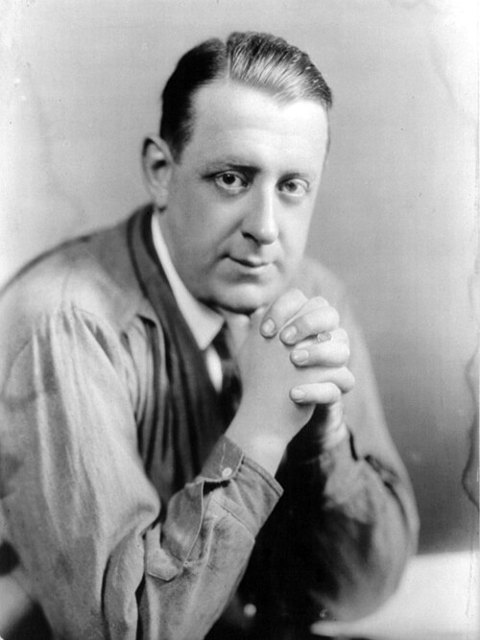
Hendrik Willem van Loon (January 14, 1882 – March 11, 1944) was a Dutch-American historian, journalist, and children's book author.
Life
Van Loon was born in Rotterdam, Netherlands, the son of Hendrik Willem van Loon and Elisabeth Johanna Hanken. He immigrated to the United States in 1902 to study at Harvard University and then Cornell University, where he received his AB in 1905. In 1906 he married Eliza Ingersoll Bowditch (1880–1955), daughter of a Harvard professor, by whom he had two sons, Henry Bowditch and Gerard Willem. The newlyweds moved to Germany, where van Loon received his Ph.D. from the Ludwig-Maximilians-Universität München in 1911 with a dissertation that became his first book, The Fall of the Dutch Republic (1913). He was a correspondent for the Associated Press during the Russian Revolution of 1905 and again in Belgium in 1914 at the start of World War I. He lectured at Cornell University from 1915 to 1916; in 1919 he became an American citizen.
Van Loon had two later marriages, to Eliza Helen (Jimmie) Criswell in 1920 and the playwright Frances Goodrich Ames in 1927, but after a divorce from Ames he returned to Criswell (it is debatable whether they actually remarried), who inherited his estate in 1944.
Van Loon was a dog lover. His most famous dog—named Mungo, after Sir Walter Scott's dog—grew too large to handle and was sent back to Newfoundland, where he was adopted as a mascot by Lieutenant Nick Robson. Mungo was photographed on base with Charlie McCarthy and Edgar Bergen, and flew onboard missions seeking to bomb Nazi U-boats during World War II.