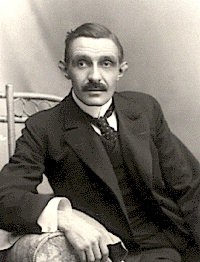
Herman Joachim Bang (20 April 1857 – 29 January 1912) was a Danish journalist and author, one of the men of the Modern Breakthrough.
Early life and education
Bang was born in Asserballe, on the small Danish island of Als, the son of vicar Frederik Ludvig Bang (1816–75) and Thora Elisabeth Salomine Blach (1829–71). His paternal grandfather was the medical doctor Ole Bang. He was also related to N. F. S. Grundtvig. His family history was marked by insanity and disease.
During the Second Schleswig War, Bang moved with his family to Horsens. His father was later appointed as pastor of Tersløse, on Zealand. His mother died in 1871. His father was hit by mental disease and died just four years later. Bang matriculated from Sorø Academy in 1875 and earned his Cand. Phil. degree from the University of Copenhagen in 1877. He spent his first student years living with his grandfather, Old Bang, whom he later described in the novel Det graa hus. He began to study law but gave up his studies with aspirations to become an actor.
Writing career
When he was twenty he published two volumes of critical essays on the realistic movement. In 1880 he published his novel Haabløse Slægter (Families Without Hope), which aroused immediate attention. The main character was a young man who had a relationship with an older woman. The book was considered obscene at the time and was banned. After some time spent in travel and a successful lecture tour of Norway and Sweden, he settled in Copenhagen and produced a series of novels and collections of short stories which placed him in the front rank of Scandinavian novelists. Among his more famous stories are "Fædra" (1883) and "Tine" ("Tina", 1889).