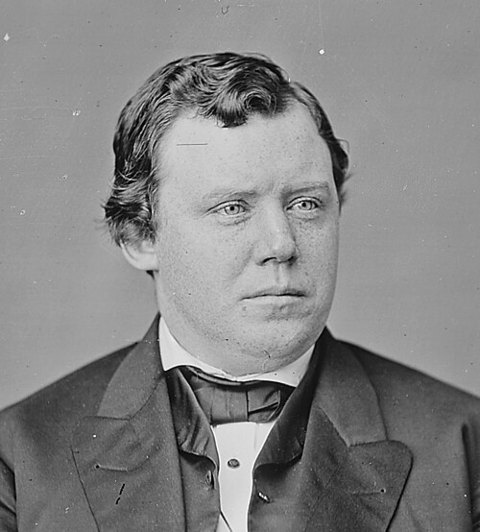
Ignatius Loyola Donnelly (November 3, 1831 – January 1, 1901) was an American U.S. representative, populist writer, and pseudoscientist. He is known primarily now for his fringe theories concerning Atlantis, Catastrophism (especially the idea of an ancient impact event affecting ancient civilizations), and Shakespearean authorship. These works are widely regarded as examples of pseudoscience and pseudohistory.
Life and career
Donnelly was the son of Philip Carrol Donnelly, an immigrant from Fintona, County Tyrone, Ireland, who had settled in Philadelphia, Pennsylvania. His sister was the writer Eleanor C. Donnelly. On June 29, 1826, Philip had married Catherine Gavin, who was the daughter of John Gavin, also an immigrant from Fintona, County Tyrone, Ireland. After starting as a peddler, Philip studied medicine at the Philadelphia College of Medicine.
Catherine provided for her children by operating a pawn shop. Ignatius, her youngest son, was admitted to the prestigious Central High School, the second oldest public high school in the United States. There he studied under the presidency of John S. Hart, excelling primarily in literature.
Donnelly decided to become a lawyer and became a clerk for Benjamin Brewster, who later became Attorney General of the United States. Donnelly was admitted to the bar in 1852. In 1855, he married Katherine McCaffrey, with whom he had three children. In 1855, he resigned his clerkship, entered politics with campaign speeches for Democratic candidates, and participated in communal home building schemes. He fell away from the Catholic Church sometime in the 1850s, and thereafter, never participated in any organized religion.