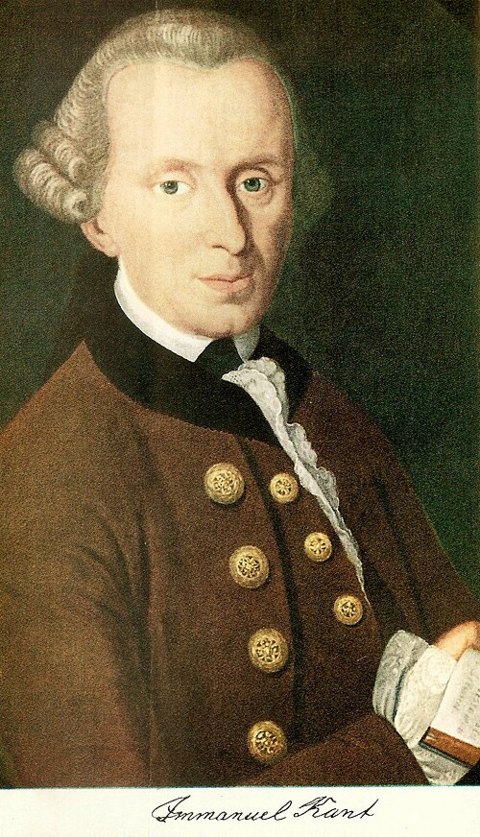
Immanuel Kant (born Emanuel Kant; 22 April 1724 – 12 February 1804) was a German philosopher. Born in Königsberg in the Kingdom of Prussia, he is considered one of the central thinkers of the Enlightenment. His comprehensive and systematic works in epistemology, metaphysics, logic, ethics, aesthetics, political theory, and philosophy of religion have made him one of the most influential and highly discussed figures in modern Western philosophy.
Kant's philosophy is centered on the human subject and motivated by the desire to secure the possibility of both knowledge and morality against the threats of scepticism and determinism. In the Critique of Pure Reason (1781/1787), Kant argues for transcendental idealism, the doctrine that space and time are mere "forms of intuition" (German: Anschauung) that structure all experience and that we have knowledge only of "appearances" and not of the nature of things in themselves. Kant drew a parallel to the Copernican Revolution in his proposal to think of the objects of experience as conforming to people's spatial and temporal forms of intuition and the categories of the understanding, instead of the traditional method of showing how the mind might conform to its objects.
Kant believed that reason is the source of morality and that the categorical imperative binds all rational agents. He believed that aesthetics arises from a faculty of disinterested judgment. Kant hoped that perpetual peace could be secured through an international federation of republican states and international cooperation. Kant believed that true religion is grounded on morality. The exact nature of his religious views is a matter of dispute.