Analysis of the Phenomena of the Human Mind
Online reading View book
Author
Scottish historian, economist, political theorist and philosopher (1773-1836)
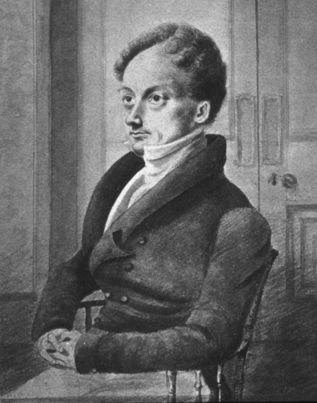
James Mill (born James Milne; 6 April 1773 – 23 June 1836) was a Scottish historian, economist, and political theorist, who was a founder of the Ricardian school of economics. He wrote the influential The History of British India (1817) which divided Indian history into three parts: Hindu, Muslim and British..
Mill was the father of John Stuart Mill, the paradigmatic philosopher of liberalism.
James Milne, later known as James Mill, was born in Northwater Bridge, in the parish of Logie Pert, Angus, Scotland, the son of James Milne, a shoemaker and small farmer. His mother, Isabel Fenton, of a family that had suffered from connection with the Stuart rising, resolved that he should receive a first-rate education, and after the parish school they sent him on to the Montrose Academy, where he remained until the unusual age of seventeen and a half. He then entered the University of Edinburgh, where he distinguished himself as a Greek scholar.
In October 1789, he was ordained as a minister of the Church of Scotland, but met with little further success. According to John Stuart Mill's Autobiography, his father, though "educated in the creed of Scotch Presbyterianism, had, by his own studies and reflections, been early led to reject not only the belief in Revelation, but the foundations of what is commonly called Natural Religion." From 1790 to 1802, while supporting himself by various tutorships, he also pursued various historical and philosophical studies. With little prospect of a career in Scotland, in 1802, he went to London in company with Sir John Stuart of Fettercairn, then member of parliament for Kincardineshire, and devoted himself to his literary work. From 1803 to 1806, he was editor of an ambitious periodical called the Literary Journal, which tried to give a summary view of all the leading departments of human knowledge. During this time, he also edited the St James's Chronicle, published by the same proprietor. In 1804, he wrote a pamphlet on the corn trade, arguing against a tariff (or 'bounty') on the export of grain. In 1805, he published a translation (with notes and quotations) of An Essay on the Spirit and Influence of the Reformation of Luther by Charles de Villers on the Reformation, and an attack on the alleged vices of the papal system. About the end of this year, he began work on The History of British India, which was to occupy him for twelve years, rather than the three or four that he had expected.
Text: “James Mill”, from Wikipedia, the free encyclopedia, under the license CC BY-SA 4.0. Dates and facts: Wikidata.
Collection
1 book