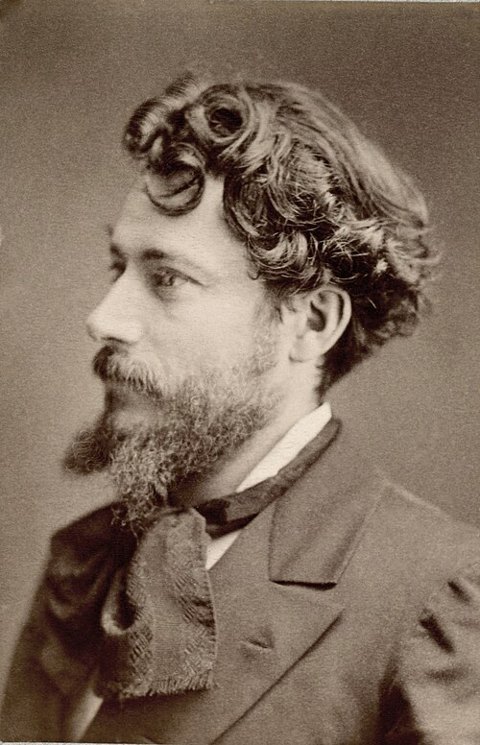
Jean François Victor Aicard (4 February 1848 – 13 May 1921) was a French poet, dramatist, and novelist.
Biography
He was born in Toulon. His father, Jean Aicard, was a journalist of some distinction, and the son began his career in 1867 with Les Jeunes Croyances, followed in 1870 by a one-act play produced at the Marseille theatre.
His poems include: Les Rebellions et les apaisements (1871); Poèmes de Provence (1874), and La Chanson de l'enfant (1876), both of which were crowned by the Academy; Miette et Noré (1880), a Provençal idyll; Le Livre d'heures de l'amour (1887); Jésus (1896); a collection of poems for children (1912) and Hollande, Algerie (1913), as well as various volumes of war poetry. Of his plays the most successful was Le Père Lebonnard (1890), which was originally produced at the Théâtre Libre. Among his other works are the novels, Le Roi de Camargue (1890), L'Ame d'un enfant (1898) and Tata (1901), Benjamine (1906), Arlette des Mayans (1917), and two volumes of adventure stories, Un Bandit a la Française and its sequel Le fameux chevalier Gaspard de Besse, both in 1919. La Vénus de Milo (1874) was an account of the discovery of the statue from unpublished documents.
He was elected a member of the Académie française in 1909.
He was elected mayor of Solliès-Ville in 1919, had the ruins of the Forbin castle listed as a historic monument and had the Comédie-Française play his play Forbin de Solliès ou le Testament du roi René there.
He died in Paris, 13 May 1921.