Philosophie zoologique
Online reading View book
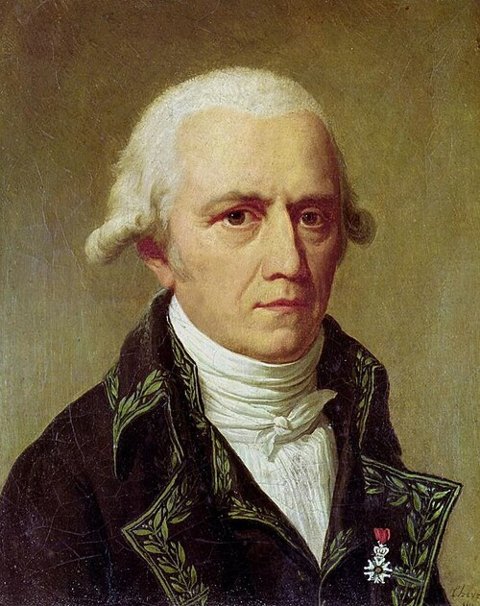
Author
French naturalist (1744-1829)
Jean-Baptiste Pierre Antoine de Monet, chevalier de Lamarck (1 August 1744 – 18 December 1829), often known simply as Lamarck (French: [ʒɑ̃batist lamaʁk]), was a French naturalist, biologist, academic, and soldier. He was an early proponent of the idea that biological evolution occurred and proceeded in accordance with natural laws.
Lamarck fought in the Seven Years' War against Prussia, and was awarded a commission for bravery on the battlefield. Posted to Monaco, Lamarck became interested in natural history and resolved to study medicine. He retired from the army after being injured in 1766, and returned to his medical studies. He developed a particular interest in botany, and after publishing the three-volume work Flore française in 1778, he gained membership of the French Academy of Sciences in 1779. Lamarck became involved in the Jardin des Plantes and was appointed to the Chair of Botany in 1788. When the French National Assembly founded the Muséum national d'Histoire naturelle in 1793, Lamarck became a professor of zoology.
In 1801, he published Système des animaux sans vertèbres, a major work on the classification of invertebrates, a term which he coined. In an 1802 publication, he became one of the first to use the term "biology" in its modern sense. Lamarck continued his work as a premier authority on invertebrate zoology. He is remembered, at least in malacology, as a taxonomist of considerable stature.
The modern era generally remembers Lamarck for a theory of inheritance of acquired characteristics, called Lamarckism (inaccurately named after him), soft inheritance, or use/disuse theory, which he described in his 1809 Philosophie zoologique. Though the idea of soft inheritance antedates him, and was a small element of his theory of evolution, in his time it was accepted by many natural historians. His idea of use/disuse later aligned with Darwin's idea of natural selection and is believed to have in part inspired Darwin. Lamarck's contribution to evolutionary theory consisted of the first cohesive theory of biological evolution, in which a complexifying force drove organisms up a ladder of complexity, and a second environmental force adapted them to local environments through use and disuse of characteristics, differentiating them from other organisms. Scientists have debated whether advances in the field of transgenerational epigenetics mean that Lamarck was to an extent correct, or not.
Text: “Jean-Baptiste Lamarck”, from Wikipedia, the free encyclopedia, under the license CC BY-SA 4.0. Dates and facts: Wikidata.
Collection
1 book