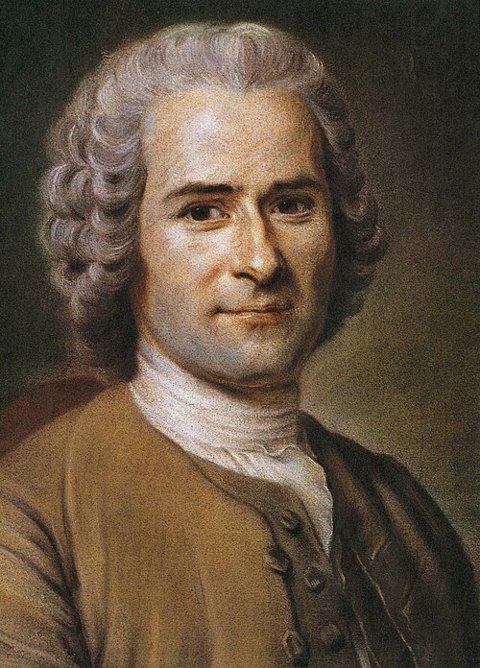
Jean-Jacques Rousseau (UK:, US:; French: [ʒɑ̃ʒak ʁuso]; 28 June 1712 – 2 July 1778) was a Genevan philosophe, writer, and composer. His political philosophy influenced the progress of the Age of Enlightenment throughout Europe, as well as aspects of the French Revolution and the development of modern political, economic, and educational thought.
Rousseau's Discourse on Inequality, which argues that private property is the source of inequality, and The Social Contract, which outlines the basis for a legitimate political order, are cornerstones in modern political and social thought. Rousseau's sentimental novel Julie, or the New Heloise (1761) was important to the development of preromanticism and romanticism in fiction. His Émile, or On Education (1762) is an educational treatise on the place of the individual in society. Rousseau's autobiographical writings—the posthumously published Confessions (completed in 1770), which initiated the modern autobiography, and the unfinished Reveries of the Solitary Walker (composed 1776–1778)—exemplified the late 18th-century "Age of Sensibility", and featured an increased focus on subjectivity and introspection that later characterized modern writing.