Author
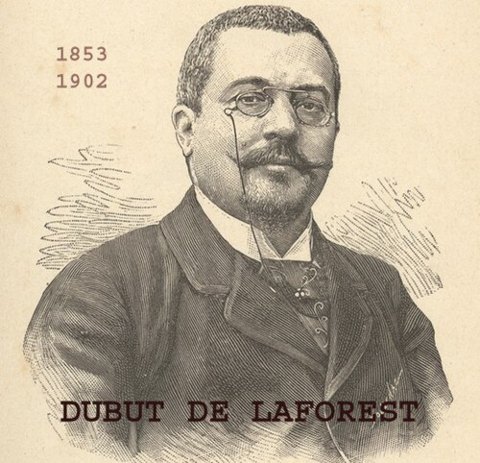
Jean-Louis Dubut de Laforest
Author (1853–1902)
- Born
- July 24, 1853, Saint-Pardoux-la-Rivière
- Died
- April 3, 1902, Paris
- Nationality
- France
- Occupation
- Writer
Life and work
Jean-Louis Dubut de Laforest (24 July 1853 – 3 April 1902) was a French author. He was a prolific writer, and published many novels on topics that were considered daring for the times, some of which were serialized in the press.
Life
Jean-Louis Dubut de Laforest was born in Saint-Pardoux-la-Rivière, Dordogne on 24 July 1853.
He attended secondary schools in Périgueux and Limoges.
After studying law, Jean-Louis Laforest Dubut became an advocate and editor of the newspaper L'Avenir de la Dordogne.
He was appointed prefectorial counselor in Beauvais, Oise, in 1879, but resigned in 1882 and devoted himself to literature.
He wrote many novels and plays, and contributed to Le Figaro under the pseudonym "Jean Tolbiac".
Dubut de Laforest was a member of Le Chat Noir and of the theatrical and artistic circle Gardénia, founded by Paul Fabre.
He published a number of novels that were based on the scientific discoveries of his time, and also novels of manners: Les Dames de Lameth, Tête à l'envers, La Crucifiée, Le Rêve d'un viveur, Un américain de Paris, Belle-maman, La Baronne Emma, Contes à la paresseuse, Les Dévorants de Paris, Le Gaga, La Bonne à tout-faire, Le Cornac, Mademoiselle de Marbeuf and Contes à la lune.
In Le Faiseur d'hommes (The Maker of Men) (1884), Dubut de Laforest treated the problem of artificial insemination of a woman for the first time in the history of literature.
He addressed realities such as the existence of homosexual circles in Paris in La Vierge du trottoir and Esthètes et cambrioleurs.
Text: “Jean-Louis Dubut de Laforest”, from Wikipedia, the free encyclopedia, under the license CC BY-SA 4.0. Dates and facts: Wikidata.
Collection
Books by Jean-Louis Dubut de Laforest
1 book