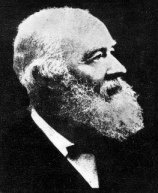
John Ball (20 August 1818 – 21 October 1889) was an Irish politician, naturalist and Alpine traveller.
Background and education
Ball was born in Dublin, the eldest son of Nicholas Ball, judge of the Court of Common Pleas (Ireland) and his wife Jane Sherlock. He was educated at Oscott College near Birmingham, and at Christ's College, Cambridge, where he was 41st Wrangler but as a Roman Catholic could not be admitted to a BA degree. He showed in his early years a taste for natural science, particularly botany; and after leaving Cambridge he travelled in Switzerland and elsewhere in Europe and North Africa, studying his favourite pursuits, and contributing papers on botany and the Swiss glaciers to scientific periodicals.
Political career
In 1846 Ball was made an assistant poor-law commissioner, but resigned in 1847, and in 1848 stood unsuccessfully as a parliamentary candidate for Sligo. In 1849 he was appointed second poor-law commissioner, but resigned in 1852 and successfully contested the County Carlow constituency in the Whig interest. In 1854, while grave doubts were raised in well-informed quarters about entering a war with Russia, the voice of the people found expression in Ball who assured the government that justification of the Crimean war was vast, high and noble: 'the maintenance in civilised society of the principles of right and justice'. In the British House of Commons he attracted Lord Palmerston's attention by his abilities, and in 1855 was made Under-Secretary of State for the Colonies, a post which he held for two years.