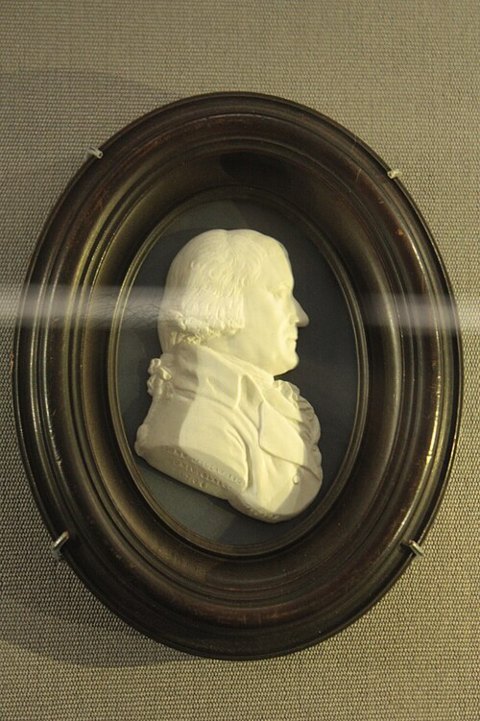
John Millar of Glasgow (22 June 1735 – 30 May 1801) was a Scottish philosopher, historian and Regius Professor of Civil Law at the University of Glasgow from 1761 to 1800.
Biography
Born a son of the manse of the Kirk o' Shotts, Shotts, Lanarkshire, John Millar was educated by an uncle and then, on his father being transferred to the parish of Hamilton, at the Old Grammar School of Hamilton (renamed the Hamilton Academy in 1848.) Continuing his studies at the University of Glasgow, he became one of the most important followers of Adam Smith, the founder of economic science. For a short time in the 1750s he was tutor in the household of Henry Home, Lord Kames. In 1760 he was admitted to the Faculty of Advocates. From 1761 to 1800, Millar was Regius Professor of Civil Law at Glasgow, where his lectures gained him nationwide fame. His colleagues and supporters included Smith, Kames, and David Hume. Millar was elected Clerk of the Senate of the University of Glasgow in 1772.
Millar's Origin of the Distinction of Ranks, published in 1778, advanced the view that economic system determines all social relations, even those between the genders. Such a view later became known as economic determinism, and was an important influence on Marxism. Werner Sombart described Millar's book as "one of the best and most complete sociologies that we possess".
His Historical View of the English Government, published from 1787, was an important contemporary history of England, representing a milestone in the development of historiography. Millar engaged with other historians, drawing comparisons with the works and emphasised the social and economic bases of political system, which strongly differentiated his work from most of the earlier ones, which were more speculative than scientific.