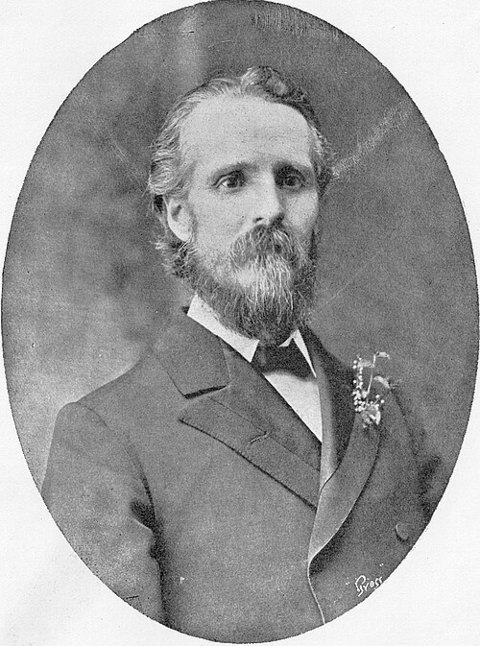
Joseph Taylor (3 May 1858 – 24 July 1942) was an English-born mining engineer and Unitarian minister. After emigrating to New Zealand in 1894, he discovered a coal field and established a coal mine at Pūponga in Golden Bay. In 1902, he was sentenced to two years' imprisonment for fraudulently altering his mining company's books of account.
Early life
Taylor was born in Audley, Staffordshire, England, in 1858, the son of George Taylor and Martha Dodd. His father was a coal miner who later became a farmer. As a youth, Joseph Taylor worked in the coal mine where his father was foreman.
On 3 May 1883 (his 25th birthday), Taylor married Annie Emery (1857–1942); they would go on to have four sons and two daughters.
Taylor was trained as a minister of the United Methodist Free Church but converted to Unitarianism in 1882. He served as minister of the Unitarian churches in Barnard Castle, Durham (1882–1884) and in South St. Mungo Street, Glasgow (1884–1885). He did not find favour with either congregation, and in 1885 the Glasgow church passed a resolution that Taylor's services be dispensed with. His career as a Unitarian minister ended shortly afterwards, and he and his family returned to Audley in Staffordshire.
Taylor began to study the works of freethinking writers and philosophers such as Herbert Spencer, and published articles in William Stewart Ross's Secular Review. Taylor co-authored with Ross the book Why I Am An Agnostic (published 1889). Taylor appears to have reverted to theism soon afterwards. He also developed a philosophy which he called "Absolutism" or "Absolute Philosophy", which he regarded as his life's most important work.