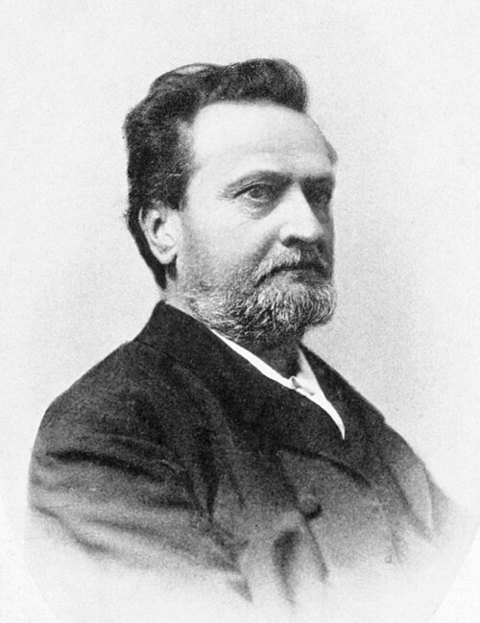
Julius von Sachs (German: [zaks]; 2 October 1832 – 29 May 1897) was a German botanist from Breslau, Prussian Silesia. He is considered the founder of experimental plant physiology and co-founder of modern water culture. Julius von Sachs and Wilhelm Knop are monumental figures in the history of botany by first demonstrating the importance of water culture for the study of plant nutrition and modern plant physiology in the 19th century.
Early life
Sachs was born at Breslau on 2 October 1832. His father, Christian Gottlieb Sachs, was an engraver by trade, and father taught son delineation and accuracy of line and color. From earliest boyhood Julius was fascinated with plants, making collections of them on many field excursions with his father. He gave much of his time between the ages of thirteen and sixteen to drawing and painting the flowers, fungi, and other specimens which he collected. At the Gymnasium from 1845 to 1850 he was most interested in the natural sciences, collecting skulls, writing a monograph on the crayfish. His natural science teacher, one Krober, showed a singular lack of foresight when he solemnly warned young Sachs against devoting himself to the natural sciences.
When he was sixteen years old, his father died, and in the next year both his mother and a brother died of cholera. Suddenly without financial support, he was fortunate to be taken into the family of Jan Evangelista Purkyně who had accepted a professorship at the University of Prague. Sachs was admitted to the university in 1851.