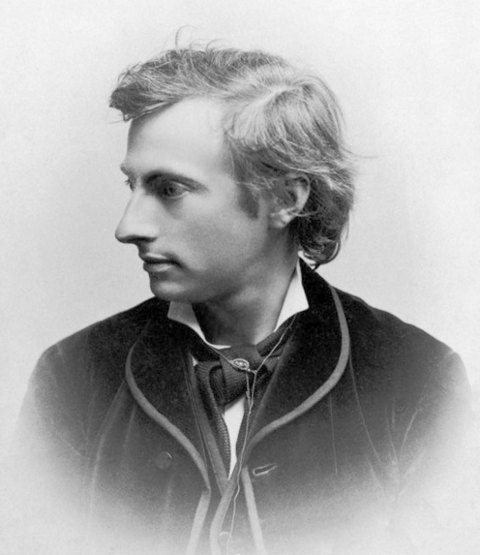
Karl Adolph Gjellerup (Danish: [ˈkʰɑˀl ˈɛːˌtʌlˀf ˈkelˀəʁɔp]; 2 June 1857 – 11 October 1919) was a Danish poet and novelist who together with his compatriot Henrik Pontoppidan won the Nobel Prize in Literature in 1917. He is associated with the Modern Breakthrough period of Scandinavian literature. He occasionally used the pseudonym Epigonos.
Youth and debut
Gjellerup was the son of a vicar in Zealand who died when his son was three years. Karl Gjellerup was raised then by the uncle of Johannes Fibiger, he grew up in a national and romantic idealistic atmosphere. In the 1870s he broke with his background and at first he became an enthusiastic supporter of the naturalist movement and Georg Brandes, writing audacious novels about free love and atheism. Strongly influenced by his origin he gradually left the Brandes line and 1885 he broke totally with the naturalists, becoming a new romanticist. A central trace of his life was his Germanophile attitude, he felt himself strongly attracted to German culture (his wife was a German) and 1892 he finally settled in Germany, which made him unpopular in Denmark on both the right and left wing. As years passed he totally identified with the German Empire, including its war aims 1914–18.
Among the early works of Gjellerup must be mentioned his most important novel Germanernes Lærling (1882, i.e. The Germans' Apprentice), a partly autobiographic tale of the development of a young man from being a conformist theologian to a pro-German atheist and intellectual, and Minna (1889), on the surface, a love story but more of a study in woman's psychology. Some Wagnerian dramas show his growing romanticist interests. An important work is the novel Møllen (1896, i. e. The Mill), a sinister melodrama of love and jealousy.