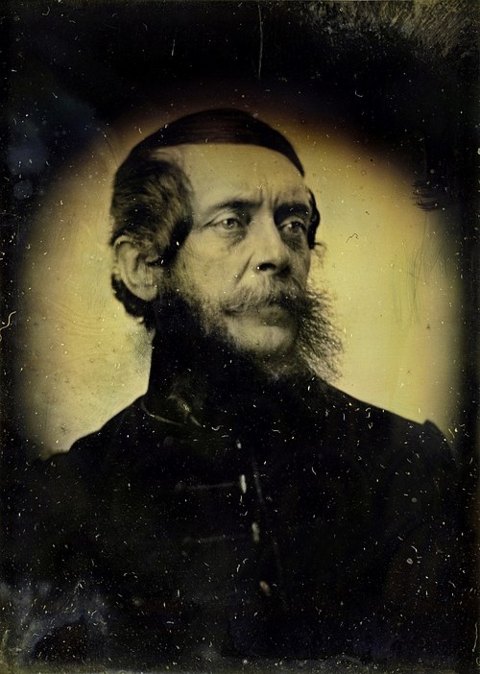
Lajos Kossuth de Udvard et Kossuthfalva (Hungarian: [ˈlɒjoʃ ˈkoʃut]; Hungarian: udvardi és kossuthfalvi Kossuth Lajos; Slovak: Ľudovít Košút; English: Louis Kossuth; 19 September 1802 – 20 March 1894) was a Hungarian nobleman, lawyer, journalist, politician, statesman, revolutionist and governor-president of the Hungarian State during the war of independence of 1848–1849.
Kossuth, known for his public speaking skills, rose from a lesser noble (gentry) background to become regent-president during the 1848–1849 Hungarian revolution. As the influential contemporary American journalist Horace Greeley said of Kossuth: "Among the orators, patriots, statesmen, exiles, he has, living or dead, no superior."
Kossuth's powerful speeches so impressed and touched the famous contemporary American orator Daniel Webster, that he wrote a book about Kossuth's life. During his lifetime, Kossuth was publicly honored in countries such as Great Britain and the United States, where he was viewed by some supporters as a symbol of democratic movements in Europe. Kossuth's bronze bust can be found in the United States Capitol with the inscription: Father of Hungarian Democracy, Hungarian Statesman, Freedom Fighter, 1848–1849. Friedrich Engels considered him to be "a truly revolutionary figure, a man who in the name of his people dares to accept the challenge of a desperate struggle, who for his nation is Danton and Carnot in one person...".