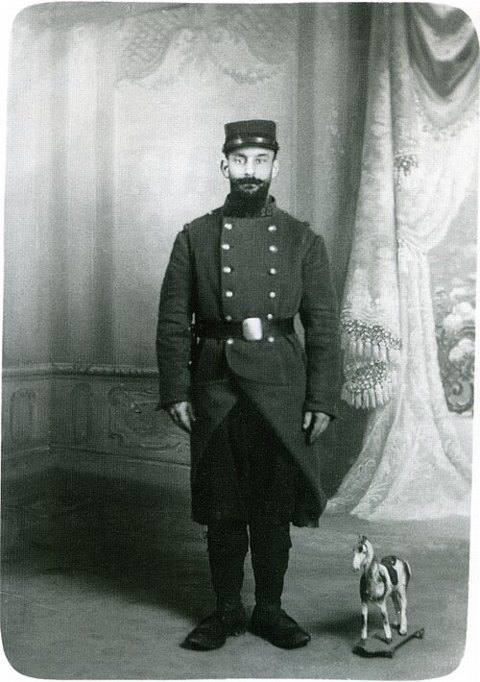
Léon Werth (French pronunciation: [leɔ̃ vɛʁt]; 17 February 1878 in Remiremont, Vosges – 13 December 1955 in Paris) was a French writer and art critic, a friend of Octave Mirbeau and a close friend and confidant of Antoine de Saint-Exupéry.
Léon Werth wrote critically and with great precision on French society through World War I, colonization, and on French collaboration during World War II.
Early life
Werth was born in 1878 in the Remiremont, Vosges, in an assimilated Jewish family. His father, Stefan, was a draper and his mother, Jovana, was the sister of the philosopher Frédéric Rauh.
He was a brilliant student, a Grand Prize winner in France's Concours général and a literary and humanities CPGE philosophy student at Lycée Henri-IV. However, he abandoned his studies to become a columnist in various magazines. Leading a bohemian life, he devoted himself to writing and art criticism.
Career
Werth was a protégé and friend of Octave Mirbeau, the author of The Diary of a Chambermaid, completing Mirabeau's final novel, Dingo, for him when the author's health failed. He manifested his anti-clericalism as an independently minded anti-bourgeois anarchist. His first significant novel, La Maison blanche, which Mirabeau prefaced, was a Prix Goncourt finalist in 1913.
At the outbreak of the First World War, Werth, 34, having earlier completed his active-duty and reserve service, was mobilized into the territorial army and, as such, assigned to the rear. Despite opposing the war, he volunteered for combat duty first as a rifleman then as a radio operator, spending time in one of the worst sectors of the war before being invalided out by a lung infection after 15 months' service. Shortly after, he completed Clavel, soldat, a pessimistic and virulently anti-war work that caused a scandal when it was released in 1919 but which was later cited as among the most faithful depictions of trench warfare in Jean Norton Cru's monumental 1929 survey of French World War I literature.