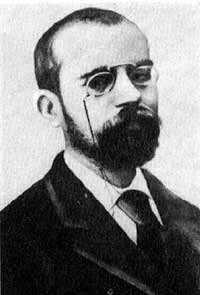
Leopoldo Enrique García-Alas y Ureña (25 April 1852 – 13 June 1901), also known as Clarín, was a Spanish realist novelist and journalist born in Zamora. His inflammatory articles, known as paliques (“chitchat”), as well as his advocacy of liberalism and anti-clericalism, made him a formidable and controversial critical voice. He died in Oviedo.
Biography
Alas was born in Zamora, from Asturian parents who moved to that city. He spent his childhood living in León and Guadalajara, until he moved to Oviedo (Asturias) in 1863. There he studied for the Bachillerato (Secondary Education) and began his law studies. He lived in Madrid from 1871 to 1878, where he began his career as a journalist (adopting the pen-name "Clarín" in 1875) and he graduated with the thesis El Derecho y la Moralidad (Law and Morality) in 1878. He taught in Zaragoza from 1882 to 1883. In 1883 he returned to Oviedo to take up a position as professor of Roman law.
Above all, Clarín is the author of La Regenta, his masterpiece and one of the best novels of the 19th century. It is a long work, similar to Flaubert's Madame Bovary, one of its influences. Other influences included Naturalism and Krausism, a philosophical current which promoted the cultural and ethical regeneration of Spain.
For the description of the provincial atmosphere and the city's collective life, Clarín used techniques such as the internal monologue or the free indirect style, which makes the story be narrated by the characters themselves and allows the reader to witness and experience their intimacy.