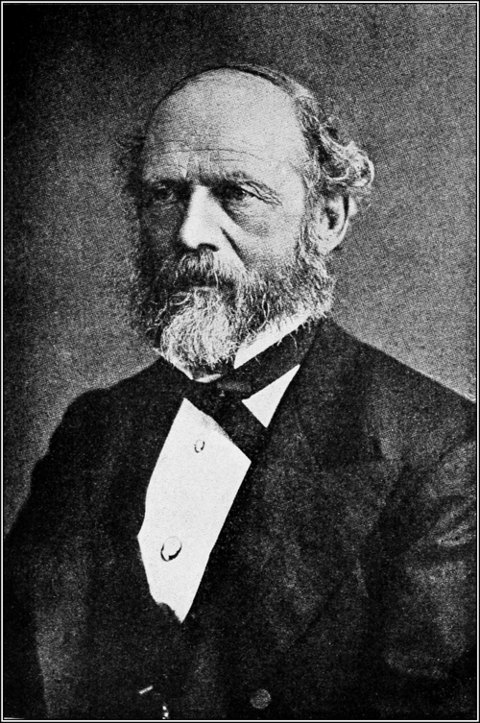
Lewis Henry Morgan (November 21, 1818 – December 17, 1881) was an American anthropologist and social theorist, who worked as a railroad lawyer. He is best known for his work on kinship and social structure, his theories of social evolution, and his ethnography of the Haudenosaunee (Iroquois). Interested in what holds societies together, he proposed the concept that the earliest human domestic institution was the matrilineal clan, not the patriarchal family.
Also interested in what leads to social change, he was a contemporary of the European social theorists Karl Marx and Friedrich Engels, who were influenced by reading his work on social structure and material culture, the influence of technology on progress. Morgan is the only American social theorist to be cited by such diverse scholars as Marx, Charles Darwin, and Sigmund Freud. Elected as a member of the National Academy of Sciences, Morgan served as president of the American Association for the Advancement of Science in 1880.
Morgan was a Republican member of the New York State Assembly (Monroe Co., 2nd D.) in 1861, and of the New York State Senate in 1868 and 1869.