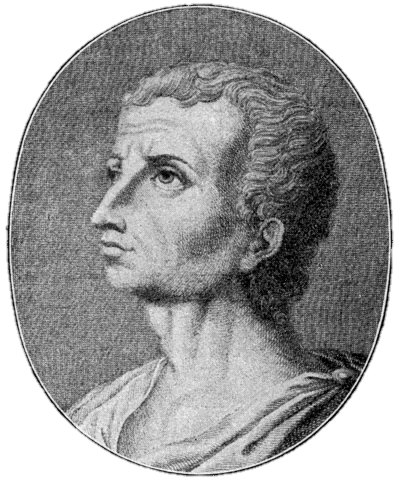
Titus Livius (Latin: [ˈtɪtʊs ˈliːwiʊs]; 59 BC – AD 17), known in English as Livy (LIV-ee), was a Roman historian. He wrote a monumental history of Rome and the Roman people, titled Ab Urbe Condita, ''From the Founding of the City'', covering the period from the earliest legends of Rome before the traditional founding in 753 BC through the reign of Augustus in Livy's own lifetime. He was on good terms with members of the Julio-Claudian dynasty and was a friend of Augustus. Livy encouraged Augustus's young grandnephew, the future emperor Claudius, to take up the writing of history.
Life
Livy was born in Patavium in northern Italy, now modern Padua, probably in 59 BC. At the time of his birth, his home city of Patavium was the second wealthiest on the Italian peninsula, and the largest in the province of Cisalpine Gaul (northern Italy). Cisalpine Gaul was merged into Italy proper during his lifetime and its inhabitants were given Roman citizenship by Julius Caesar. In his works, Livy often expressed his deep affection and pride for Patavium, and the city was well known for its conservative values in morality and politics.
Livy's teenage years were during the 40s BC, a period of civil wars throughout the Roman world. The governor of Cisalpine Gaul at the time, Asinius Pollio, tried to sway Patavium into supporting Marcus Antonius (Mark Antony), the leader of one of the warring factions during Caesar's civil war (49–45 BC). The wealthy citizens of Patavium refused to contribute money and arms to Asinius Pollio, and went into hiding. Pollio then attempted to bribe the slaves of those wealthy citizens to expose the whereabouts of their masters; his bribery failed, and the citizens instead pledged their allegiance to the Senate. It is therefore likely that the Roman civil wars prevented Livy from pursuing a higher education in Rome or going on a tour of Greece, which was common for adolescent males of the nobility at the time. Many years later, Asinius Pollio derisively commented on Livy's "patavinity", saying that Livy's Latin showed certain "provincialisms" frowned upon in Rome. Pollio's remarks may have been the result of negative feelings he harboured toward the city of Patavium from his experiences there during the civil wars.