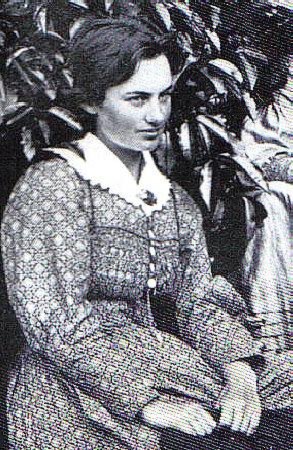
Mary Edith Durham (8 December 1863 – 15 November 1944) was a British artist, anthropologist and writer who is best known for her anthropological accounts of life in Albania in the early 20th century. Her advocacy on behalf of the Albanian cause and her Albanophilia gained her the devotion of many Albanians who consider her a national heroine.
Early life
Durham was the eldest of nine children. Her father, Arthur Edward Durham, was a distinguished London surgeon and her siblings included the scientist Herbert Durham, the geneticist Florence Margaret Durham, the suffragette and musician Lilla Durham and the civil servant Frances Hermia Durham.
She attended Bedford College (1878–1882), followed by the Royal Academy of Arts, to train as an artist. She exhibited widely and contributed a number of detailed drawings to the amphibia and reptiles volume of the Cambridge Natural History (published 1899).
Balkan expeditions
After the death of her father, Durham took on the responsibilities of caring for her sick mother for several years. It proved an exhausting experience. When she was 37, her doctor recommended that she should undertake a foreign vacation to recuperate. She took a trip by sea down the coast of Dalmatia, travelling from Trieste to Kotor and then overland to Cetinje, the capital of Montenegro. On her return to London she studied the Serbo-Croatian language and the history of the region.
Durham travelled extensively in the Balkans in order to write her first book Through the Lands of the Serbs published in London in 1904. In 1908 she wrote High Albania after travelling through the Albanian highlands, from Montenegro to Shkodër. Over the next twenty years she focused particularly on Albania, which then was one of the most isolated and undeveloped areas of Europe. She worked in a variety of relief organisations, painted and wrote, and she also collected folklore and folk art. In 1911-13 she helped Albanian refugees in Montenegro where she raised funds for medicine, food and helped wounded soldiers.