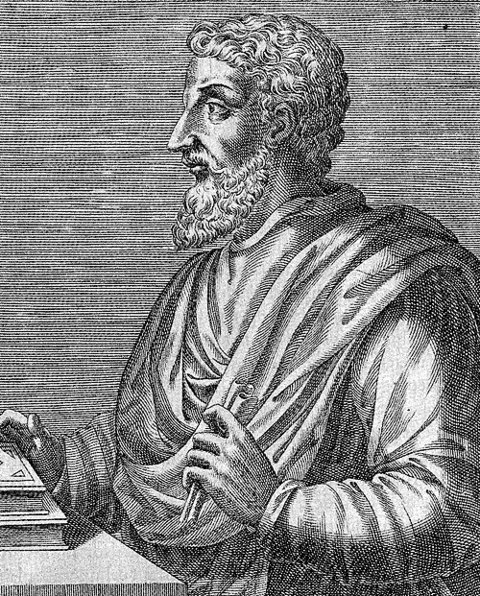
Marcus Terentius Varro (116–27 BC) was a Roman polymath and a prolific author. He is regarded as ancient Rome's greatest scholar, and was described by Petrarch as "the third great light of Rome" (after Virgil and Cicero). He is sometimes called Varro Reatinus ("Varro of Rieti") to distinguish him from his younger contemporary Varro Atacinus ("Varro of Atax").
Biography
Varro was born in or near Reate (modern Rieti in Lazio) into a family thought to be of equestrian rank. He always remained close to his roots in the area, owning a large farm in the Reatine plain (reported as near Lago di Ripasottile,) until his old age. He supported Pompey, reaching the office of praetor, after having served as tribune of the people, quaestor and curule aedile. It is probable that Varro was discontented with the course on which Pompey entered when the First Triumvirate formed c. 60 BC, and he may thus have lost his chance of rising to the consulship. He actually ridiculed the coalition in a work entitled the Three-Headed Monster (Τρικάρανος in the Greek of Appian, The Civil Wars, II.ii.9). He was one of the commission of twenty that carried out the great agrarian scheme of Caesar for the resettlement of Capua and Campania (59 BC).
During Caesar's civil war of 49 to 45 he commanded one of Pompey's armies in the Ilerda campaign of 49 BC. He escaped the penalties of having backed the losing side in the civil war through two pardons granted by Julius Caesar, before and after the 48 BC Battle of Pharsalus. Caesar appointed him to oversee the public library of Rome in 47 BC, but following Caesar's death Mark Antony proscribed him, resulting in his losing much of his property, including his library. As the Republic gave way to the Empire c. 27 BC, Varro gained the favour of Augustus, under whose protection he found the security and quiet to devote himself to study and writing.