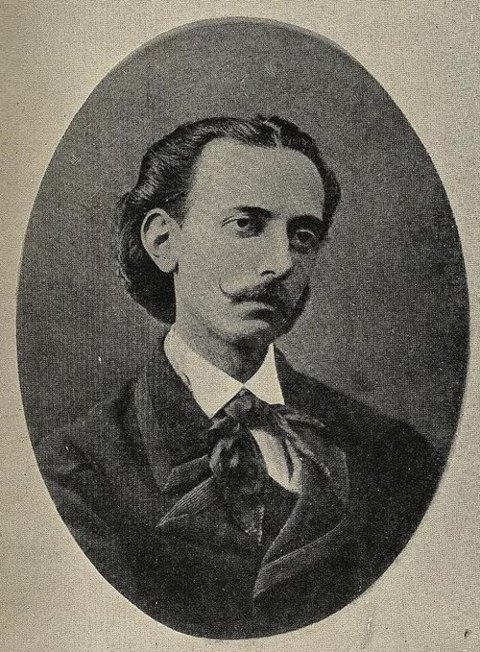
Author
Mario Rapisardi
Italian poet (1844-1912)
- Born
- February 25, 1844, Catania
- Died
- January 4, 1912, Catania
- Nationality
- Kingdom of Italy
- Occupation
- Poet and translator
Life and work
Mario Rapisardi (25 February 1844, in Catania – 4 January 1912, in Catania) was an Italian poet, supporter of Risorgimento and member of the Scapigliatura (definition but refused).
Life
As a boy, he was taught "grammar, rhetoric and the Latin language" by two priests and "a psicontologico mixture that he thought was philosophy" by a friar. To please his father, he then unwillingly took the usual course in jurisprudence, but never wanted to take the laurea in that or any other faculty. He wrote at this time "there is nothing noteworthy in my life, unless it is this, that - for good or ill - it formed me, destroying the wretched and false education I had received [up to then] and instructing and educating me, in my own way, to be outside whatever school, whatever sect, scornful of systems and prejudices".
He began his poetic career at fourteen with an ode to Saint Agatha, in which he dared to recommend the freedom of his fatherland (then under the Bourbon regime), and in 1863 published a volume of verses under the title Canti. In 1865 he came to Florence for the first time, returning there often later in his life. There he got to know Giovanni Prati, Niccolò Tommaseo, Atto Vannucci, Pietro Fanfani, Andrea Maffei, Giuseppe Regaldi, Erminia, Arnaldo Fusinato, Francesco Dall'Ongaro, Terenzio Mamiani and other "illustri e buoni", as he later called them. Also in Florence he published his La Palingenesi in 1868, recommending a religious revival for humanity. It got good reviews, and Victor Hugo read it and wrote to Rapisardi, saying "...[it is a] noble poem. You are a forerunner".
Text: “Mario Rapisardi”, from Wikipedia, the free encyclopedia, under the license CC BY-SA 4.0. Dates and facts: Wikidata.
Collection
Books by Mario Rapisardi
2 books