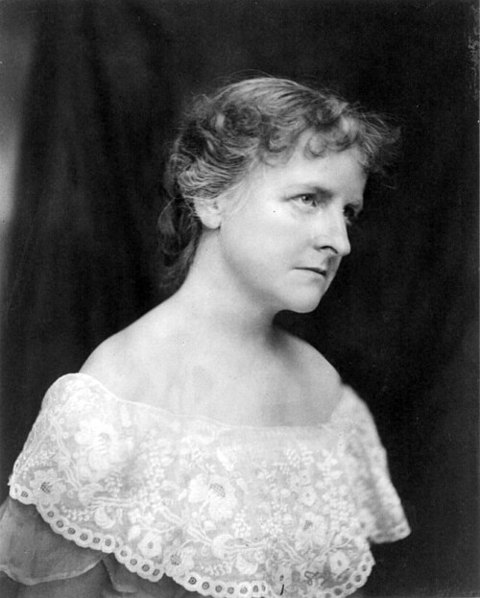
Mary Eleanor Wilkins Freeman (October 31, 1852 – March 13, 1930) was an American author. She is best known for her novel Pembroke, and also wrote a number of well-regarded ghost stories, which are still frequently anthologized.
Biography
Freeman was born in Randolph, Massachusetts on October 31, 1852, to Eleanor Lothrop and Warren Edward Wilkins, who originally baptized her "Mary Ella". Her father was a descendant of Bray Wilkins. Freeman's parents were orthodox Congregationalists, and her upbringing was very strict. Religious constraints play a key role in some of her works.
As an adolescent, Freeman was increasingly caught between the need for her mother's love and her instinct to avoid becoming her mother and subsiding into her mother's form of passivity. Despite continuous pressure from her mother to participate in domestic chores, no amount of discipline could pull Mary away from her reading to the reality of hated kitchen work. According to Edward Foster's biography of Freeman, "Disliking her household duties, she avoided them, nor could she be moved by disciplinary tactics." A growing tension between Mary and her mother centered on her resistance to undertaking the tasks expected of a "good girl".
As the years passed, the contrast between Mary and her sister, Anna, became apparent. While her sister Anna willingly undertook domestic work and increasingly met her parents' expectations, Mary quietly began to reject them. She would resist her mother's world of domesticity throughout her entire life. Her story "The Revolt of Mother" is especially significant in this context, for the story seems to have been written as a tribute to her mother's work, a form of work she had never valued in her mother's lifetime.