Author
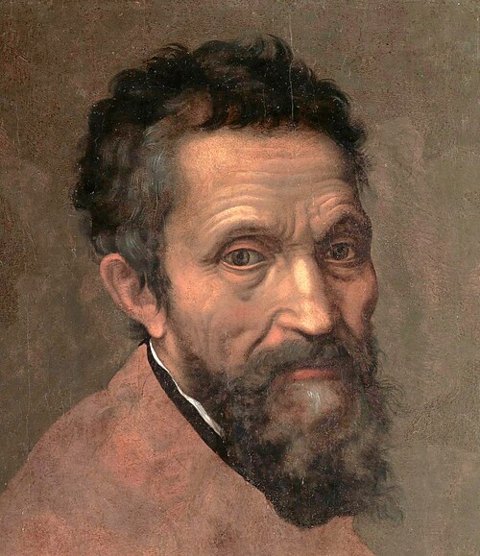
Michelangelo Buonarroti
Italian artist and architect (1475-1564)
- Born
- March 6, 1475, Caprese Michelangelo
- Died
- February 18, 1564, Rome
- Nationality
- Republic of Florence
- Occupation
- Sculptor, architectural drafter, painter, architect and poet
- Movement
- High Renaissance and Renaissance painting
- Notable works
- David · Pietà (Michelangelo) · Dying Slave · The Last Judgment · Doni Tondo · Madonna of the Stair · Battle of the Centaurs · The Genius of Victory
Life and work
Michelangelo di Lodovico Buonarroti Simoni (6 March 1475 – 18 February 1564), known mononymously as Michelangelo, was an Italian sculptor, painter, architect, and poet of the High Renaissance. He was born in the Republic of Florence but was mostly active in Rome from his 30s onwards. His work was inspired by models from classical antiquity and had a lasting influence on Western art. Michelangelo's creative abilities and mastery in a range of artistic arenas define him as an archetypal Renaissance man, along with his rival and elder contemporary, Leonardo da Vinci. Given the sheer volume of surviving correspondence, sketches, and reminiscences, Michelangelo is one of the best-documented artists of the 16th century.
Michelangelo achieved fame early. Two of his best-known works, the Pietà and David, were sculpted before the age of 30. Although he did not consider himself a painter, Michelangelo created two of the most influential frescoes in the history of Western art: the scenes from Genesis on the ceiling of the Sistine Chapel in Rome, and The Last Judgment on its altar wall. His design of the Laurentian Library pioneered Mannerist architecture. At the age of 71, he succeeded Antonio da Sangallo the Younger as the architect of St. Peter's Basilica. Michelangelo transformed the plan so that the Western end was finished to his design, as was the dome, with some modification, after his death.
Michelangelo was the first Western artist whose biography was published during his lifetime. Giorgio Vasari's Lives (1550), in which he was the only living artist given a biography, presented his work as the culmination of the revival of the arts and called him divino, an honorific then extended to several celebrated writers and artists. Ascanio Condivi's Life (1553), prepared with Michelangelo's participation, corrected Vasari in places, and Vasari incorporated much of it into his expanded edition of 1568. His contemporaries admired his terribilità—his ability to instill a sense of awe in viewers of his art. Attempts by subsequent artists to imitate the expressive physicality of Michelangelo's style contributed to the rise of Mannerism, a short-lived movement in Western art between the High Renaissance and the Baroque.
Text: “Michelangelo”, from Wikipedia, the free encyclopedia, under the license CC BY-SA 4.0. Dates and facts: Wikidata.
Collection
Books by Michelangelo Buonarroti
1 book