Le livre de tous les ménages
Online reading View book
Author
French inventor of airtight food preservation (1749–1841)
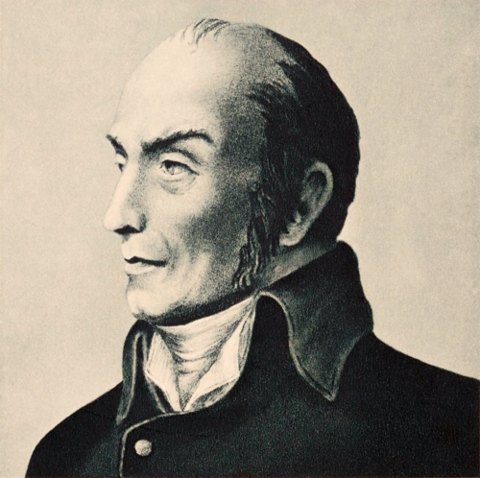
Nicolas Appert (17 November 1749 – 1 June 1841) was a French confectioner and inventor who, in the early 19th century, invented airtight food preservation. Appert, known as the "father of food science", described his invention as a way "of conserving all kinds of food substances in containers".
Appert was born in Châlons-en-Champagne, the ninth of eleven children. His family ran an inn in the town and he worked in the family business until the age of twenty, when he opened a brewery with one of his brothers. He then served as head chef to Christian IV, Count Palatine of Zweibrücken for thirteen years. Appert was a confectioner and chef in Paris from 1784 to 1795. During this period, he married Elisabeth Benoist and the couple had four children.
Appert was active during the French Revolution and took part in the execution of King Louis XVI. However, he fell under suspicion during the subsequent Reign of Terror and was arrested in April 1794, but he was able to avoid being executed himself. In 1795, he began experimenting with ways to preserve foodstuffs, succeeding with soups, vegetables, juices, dairy products, jellies, jams, and syrups. He placed the food in glass jars, sealed them with cork and sealing wax and placed them in boiling water (in later years, he switched to using an autoclave). It is believed that this technique was already being used by homemakers, but Appert was the first to do this on an industrial scale.
In 1804, La Maison Appert (English: The House of Appert), in the town of Massy, near Paris, became the first food bottling factory in the world, years before Louis Pasteur proved that heat killed bacteria. Appert then established a business to preserve a variety of food in sealed bottles. At first he used champagne bottles, imperfectly sealed by a mixture of cheese and mineral lime. Appert's method transitioned to filling thick, large-mouthed glass bottles with produce of every description, ranging from beef, fowl, eggs, milk, and prepared dishes. Appert avoided using tinplate in his early manufacture because the quality of French tinplate was poor. He left air space at the top of the bottle, and the cork would then be sealed firmly in the jar by using a vise. The bottle was then wrapped in canvas to protect it, dunked into boiling water, and boiled for as much time as Appert deemed appropriate for cooking the contents thoroughly. In honor of Appert, canning is sometimes called "appertization", which is distinct from pasteurization.
Text: “Nicolas Appert”, from Wikipedia, the free encyclopedia, under the license CC BY-SA 4.0. Dates and facts: Wikidata.
Collection
1 book