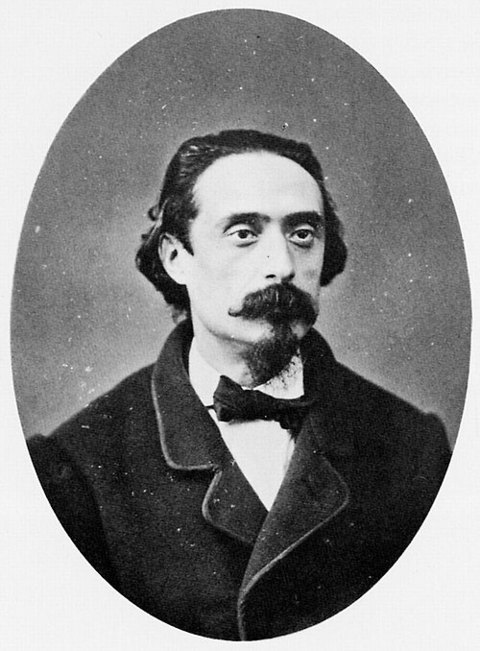
Paolo Mantegazza (Italian pronunciation: [ˈpaːolo manteˈɡattsa]; 31 October 1831 – 28 August 1910) was an Italian neurologist, physiologist, and anthropologist, known for his experimental investigation of coca leaves and its effects on the human psyche. He was also an author of fiction.
Life
Mantegazza was born in Monza on 31 October 1831. After spending his student days at the universities of Pisa and Milan, he gained his M.D. degree at the University of Pavia in 1854. After travelling in Europe, India and the Americas, he practised as a doctor in Argentina and Paraguay. He returned to Italy in 1858 he was appointed surgeon at Milan Hospital and professor of general pathology at the University of Pavia. In 1870, he was nominated professor of anthropology at the Istituto di Studi Superiori in Florence. Here, he founded the first Museum of Anthropology and Ethnology in Italy, and later the Italian Anthropological Society.
From 1865 to 1876, he was deputy for Monza in the Parliament of Italy, and was subsequently elected to the Italian Senate. He became the object of fierce attacks because of the extent to which he practised vivisection.
In 1879, Mantegazza travelled to Norway with his colleague Stephan Sommier on a quest to collect "anthropological facts" about the Sámi. He gathered three types of information: cultural items, anthropometric measurements, and photographs. The last category featured images he and Sommier had created as well as photos he had taken along the way. All of them were returned to Florence, where Mantegazza was the director of the anthropological museum.