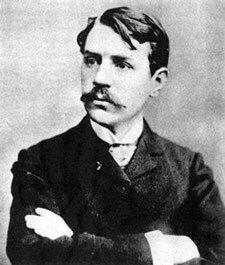
Paul Charles Joseph Bourget (French: [buʁʒɛ]; 2 September 1852 – 25 December 1935) was a French poet, novelist and critic. He was nominated for the Nobel Prize in Literature five times.
Paul Bourget was born in Amiens, France. He initially abandoned Catholicism but eventually returned to it in the late 19th century. Bourget is known for his psychological and moralistic novels that often portrayed the complex emotions of women and the ideas, passions, and failures of young men in France. Some of his notable works include Le Disciple (1889), a bestseller that explored the consequences of materialism and positivism, and other novels such as Cruelle énigme (1885), André Cornelis (1886), and Mensonges (1887). He was admitted to the Académie Française in 1894 and was promoted to be an officer of the Légion d'honneur in 1895.
Bourget's early career was marked by volumes of verse, but he later found success in literary journalism, and his critical works such as Sensations d'Italie (1891) are highly regarded. Though his novels were widely popular in his time, they have since been largely forgotten by the general reading public. Nonetheless, Bourget remains an important figure in French literature for his psychological and moralistic approach to fiction, and his influence can be seen in the works of several composers, including Claude Debussy, who set some of Bourget's poems to music.