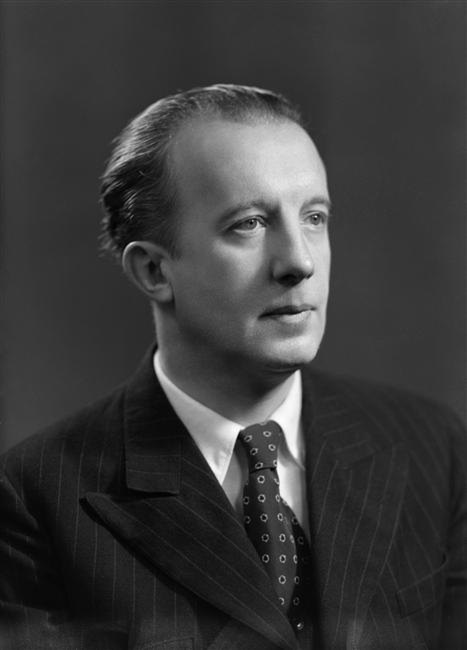
Paul Éluard (French: [elɥar]), born Eugène Émile Paul Grindel ([ɡʁɛ̃dɛl]; 14 December 1895 – 18 November 1952), was a French poet and one of the founders of the Surrealist movement.
In 1916, he chose the name Paul Éluard, a matronymic borrowed from his maternal grandmother. He adhered to Dadaism and became one of the pillars of Surrealism by opening the way to artistic action politically committed to the Communist Party.
During World War II, he was the author of several poems against Nazism that circulated clandestinely. He became known worldwide as The Poet of Freedom and is considered the most gifted of French surrealist poets.
Early life
Éluard was born on 14 December 1895 in Saint-Denis, Seine-Saint-Denis, the son of Eugène Clément Grindel and wife Jeanne-Marie née Cousin. His father was an accountant when Paul was born but soon opened a real-estate agency. His mother was a seamstress. Around 1908, the family moved to Paris, rue Louis Blanc. Éluard attended the local school in Aulnay-sous-Bois, before obtaining a scholarship to attend the École Supérieure de Colbert. At the age of 16, he contracted tuberculosis, interrupted his studies, and remained hospitalized until April 1914 in the Clavadel sanatorium near Davos.
There he met a young Russian girl of his age, Helena Diakonova, whom he nicknamed Gala. He confided to her his dream of becoming a poet, of his admiration for "poets dead of hunger, sizzling dreams" and of his parents' disapproval. She wrote to him that "you will become a great poet". They became inseparable. She believed in him and gave him confidence and encouragement and provided him with the sense of security he needed to write. She listened and was involved in the creation of his verses. She became his muse and the critic, always honest, and told him which images she preferred, which verses she disliked. He was then particularly inspired by Walt Whitman. In Clavadel, Éluard also met the Brazilian youngster Manuel Bandeira, who would become one of the foremost poets of the Portuguese language. They became friends during their hospitalization in the sanatorium, and kept in touch by mail after returning to their respective countries.