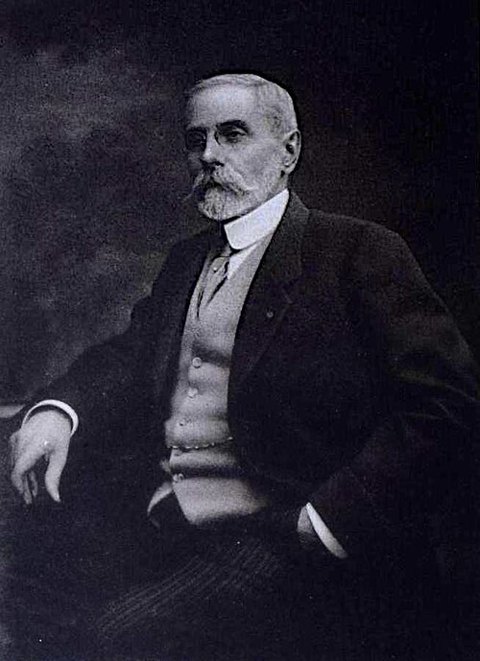
Paul-François Groussac (February 15, 1848 – June 27, 1929) was a French-born Argentine writer, literary critic, historian, and librarian.
Biography
Groussac was born in Toulouse to Pierre Groussac, the scion of an old Languedocian family, and Catherine (née Deval). As a young man, Groussac studied classics in his native Toulouse. He was admitted to the École Navale in 1865, but chose not to pursue a naval career. The next year he moved to Buenos Aires, which would remain his home for the rest of his life. Over the next seventeen years, he worked as a professor, directed the Escuela Normal de Tucumán, and served as inspector general of the national colleges. In 1883 he made a trip to France. After his return, in 1885, he was designated inspector of education and head of the Biblioteca Nacional. He would hold this position until his death forty-four years later.
His most notable works are La Biblioteca (1896) and Anales de la Biblioteca (1900), which were anthologies of critical essays, historical accounts of the library, and documents pertaining to the history of the Río de la Plata region. As director of the literary journal SudAmérica, Groussac became a central figure in the Argentine literary world. His works, including Studies of Argentine History, Historical Essay on Tucumán, and Mendoza and Garay, are characterized by their factual richness, vivid depiction of characters and their environment, and their lucid and conscientious style. Groussac's other main works include Forbidden Fruit, Argentine Tales, The Divisa Punzó, and Literary Criticism and the Malvinas Islands.