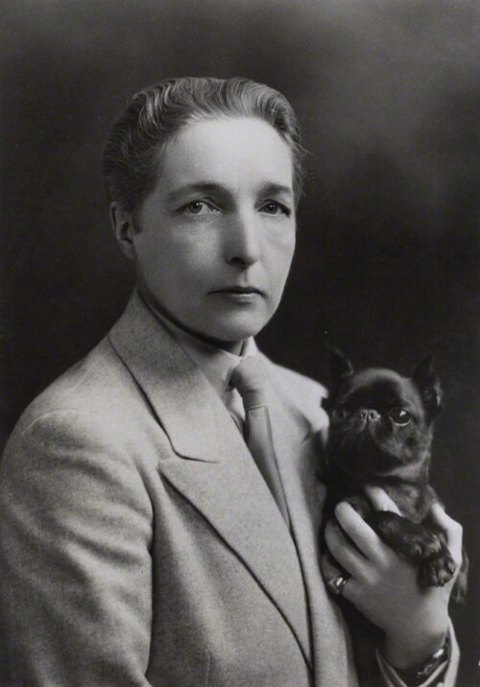
John Radclyffe-Hall (12 August 1880 – 7 October 1943), born as Marguerite Antonia Radclyffe-Hall and also known by her pen name Radclyffe Hall, was an English poet and author best known for her novel The Well of Loneliness (1928), a groundbreaking work in lesbian literature.
Early life
John Radclyffe-Hall was born as Marguerite Antonia in 1880 at "Sunny Lawn", Durley Road, Bournemouth, Hampshire (now Dorset), to Radclyffe ("Rat") Radclyffe-Hall and Mary Jane Sager (née Diehl). Hall's father was a wealthy philanderer educated at Eton and Oxford. He seldom worked, as he had inherited a large sum of money from his father, an eminent physician who was head of the British Medical Association. Her mother was an unstable American widow from Philadelphia. In 1882, Hall's father abandoned the family, but left behind a considerable inheritance for her.
Hall's mother subsequently married Albert Visetti, a professor of singing. She did not like her new stepfather, and despised her mother, who often dipped into Hall's inheritance for herself. Throughout her childhood, Mary made it clear that Hall was unwanted, as she had failed to get an abortion during pregnancy.
As Hall grew older and gained more autonomy, she realised that she had enough inheritance money from her father to live without working or marrying. She began to do as she pleased, dressing in typical men's fashion of the times, such as trousers, monocles and hats. Hall was a lesbian, but described herself as a "congenital invert", a term taken from the writings of Havelock Ellis and other turn-of-the-century sexologists. She spent much of her twenties pursuing women she eventually lost to marriage.