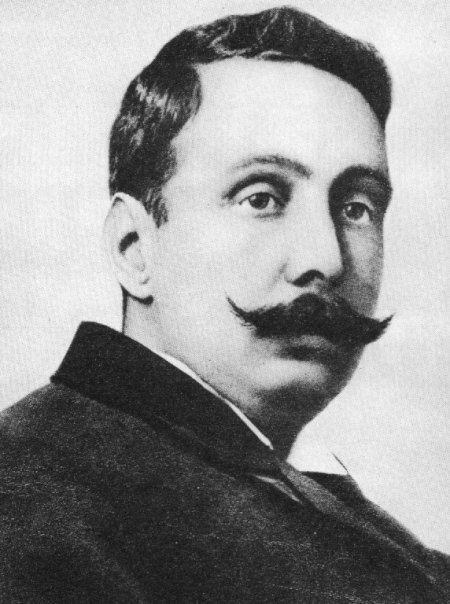
Raul Germano Brandão (12 March 1867 in Foz do Douro, Porto – 5 December 1930 in Lisbon) was a Portuguese writer, journalist and military officer, notable for the realism of his literary descriptions and for the lyricism of his language. Brandão was born in Foz do Douro, a parish of Porto, where he spent the majority of his youth. Born in a family of sailors, the ocean and the sailors are recurring themes in his work.
Biography
Brandão completed his secondary studies in 1891. After that, he joined the military academy, where he initiated a long career in the Ministry of War. While working in the ministry, he also worked as a journalist and published several books.
In 1896, Brandão was commissioned in Guimarães, where he would meet his future wife. He married in the next year and settled in the city. Despite living in Guimarães, Brandão spent long periods in Lisbon. After retiring from the army, in 1912, Brandão initiated the most productive period of his writing career. He died on 5 December 1930, age 63, after a lifetime of writing and publishing.
Published works
1890 - Impressões e Paisagens
1896 - História de um Palhaço
1901 - O Padre
1903 - A Farsa
1906 - Os Pobres (The Poor, trans. Karen Sotelino. Dalkey Archive Press, 2016)
1912 - El-Rei Junot
1914 - A Conspiração de 1817
1917 - Húmus (1917)
1919 - Memórias (vol. I)
1923 - Teatro
1923 - Os Pescadores
1924 - "A Pesca da Baleia"
1925 - Memórias (vol. II)
1926 - As Ilhas Desconhecidas
1926 - A Morte do Palhaço e o Mistério da Árvore
1927 - Jesus Cristo em Lisboa, with Teixeira de Pascoaes