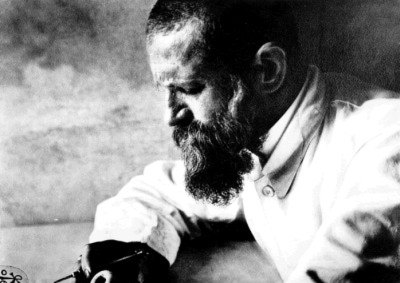
Robert Johann Koldewey (10 September 1855 – 4 February 1925) was a German archaeologist, famous for his in-depth excavation of the ancient city of Babylon in modern-day Iraq. He was born in Blankenburg am Harz in Germany, the duchy of Brunswick, and died in Berlin at the age of 69.
His digs at Babylon revealed the foundations of the ziggurat Marduk, and the Ishtar Gate; he also developed several modern archaeological techniques including a method to identify and excavate mud brick architecture. This technique was particularly useful in his excavation of the Hanging Gardens of Babylon (1899–1917) which were built ca. 580 BC using mainly unfired mudbricks.
A practicing archaeologist for most of his life, he participated in and led many excavations in Asia Minor, Greece, and Italy. After he died, the Koldewey Society was established to record and mark his architectural service.