Servetus and Calvin
Online reading View book
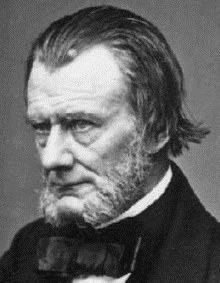
Author
English academic (1800-1875)
The Reverend Robert Willis (27 February 1800 – 28 February 1875) was an English academic. He was the first Cambridge professor to win widespread recognition as a mechanical engineer, and first to set the scientific study of vowels on a respectable foundation. He is now best remembered for his extensive writings on architectural history, including many studies of mediaeval cathedrals and a four-volume treatise on the architecture of the University of Cambridge. He was described by Pevsner as "the greatest English architectural historian of the 19th century".
Willis was born in London on 27 February 1800. His father was Dr Robert Darling Willis, physician to King George III. He was a grandson of Francis Willis. His paternal uncle was Rear Admiral Richard Willis.
His health was delicate, which prevented him from going to school, and he was privately tutored. He showed talent in music, and as a draughtsman, and when he was 19 took out a patent on an improved pedal harp. In 1820 he went to a demonstration of Wolfgang von Kempelen's "Turk", a supposed automaton chess player, and the following year published An attempt to Analyze the Automaton Chess Player, in which he showed how a human player could be concealed within the chest housing the supposed machinery.
In 1821 he studied with the Rev. Thomas Kidd, a noted classical scholar, at King's Lynn. In this town, with its mediaeval churches and guildhalls, Willis's interest in architecture developed, and he made his first known architectural drawings. Buchanan (2013) reproduces some of these drawings, and comments on his ability not just to draw, but to show the underlying structural relationships of a building, especially remarkable as he had no known training in the craft. In 1822 he entered Gonville and Caius College, Cambridge, from which he received his B.A. in 1826. He was elected a Frankland Fellow of the College the same year and in 1827 he was ordained deacon and priest. He was promoted to a Foundation Fellow in 1829, and became Steward of the College, positions he held until his marriage, in 1832, to Mary Anne, daughter of Charles Humfrey of Cambridge. They were resident in Cambridge for the remainder of their lives, but also later had a London house.
Text: “Robert Willis (engineer)”, from Wikipedia, the free encyclopedia, under the license CC BY-SA 4.0. Dates and facts: Wikidata.
Collection
1 book