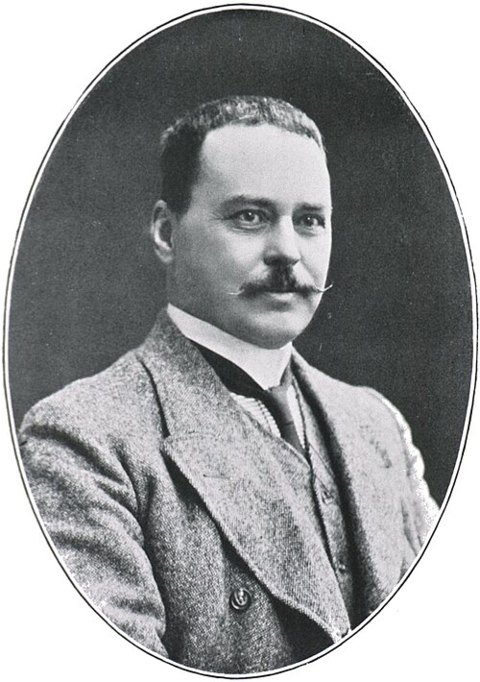
Sir Ronald Ross (13 May 1857 – 16 September 1932) was a British medical doctor. He received the 1902 Nobel Prize for Physiology or Medicine "for his work on malaria, by which he has shown how it enters the organism and thereby has laid the foundation for successful research on this disease and methods of combating it". His discovery of the malarial parasite in the gastrointestinal tract of a mosquito in 1897 proved that malaria was transmitted by mosquitoes, and laid the foundation for the method of combating the disease.
Ross was a polymath, writing a number of poems, publishing several novels, and composing songs. He was also an amateur artist and mathematician. He worked in the Indian Medical Service for 25 years. It was during his service that he made the groundbreaking medical discovery. After resigning from his service in India, he joined the faculty of Liverpool School of Tropical Medicine, and continued as Professor and Chairman of Tropical Medicine of the institute for 10 years. In 1926, he became Director-in-Chief of the Ross Institute and Hospital for Tropical Diseases, which was established in honour of his works. He remained there until his death.